
Researcher devises new technology that could turn ocean waves into clean energy

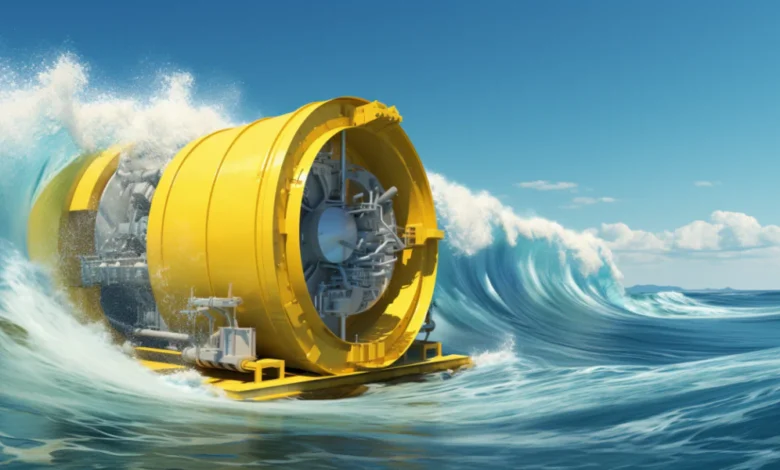
A researcher at the University of Osaka, Japan, is about breaking one of the hurdles in achieving a long-lasting, reliable energy source without adverse impact on the environment. Ocean waves are among the most plentiful and reliable sources of renewable energy on Earth, but are seemingly ignored due to lack of adequate tools needed to exploit the resource for usable electricity.
Experts have pointed at various difficulties impeding successes towards converting occean waves, noting that most existing wave energy systems work efficiently only under specific conditions, thereby limiting their usefulness in the ever-changing ocean environment.
However, in an effort to assail this hurdle for more flexible and effective technologies, Takahito Iida, an associate professor at Graduate School of Engineering, University of Osaka, decided to research on a new type of system to overcome these limitations.
The device, known as a gyroscopic wave energy converter (GWEC), was evaluated for its ability to support large-scale power generation. The results of the work published in the Journal of Fluid Mechanics, found that GWEC produces electricity using a spinning flywheel housed within a floating structure. As the platform moves with the waves, the flywheel converts that motion into energy.
Because the system relies on gyroscopic behavior, it can be adjusted to capture energy efficiently across a wide range of wave frequencies instead of just a narrow band. The key mechanism behind the device is gyroscopic precession, which occurs when a spinning object responds to an external force.
The study author noted that when waves cause the floating structure to pitch (move up and down), the spinning flywheel changes its orientation through precession (changing the direction it is spinning in).