
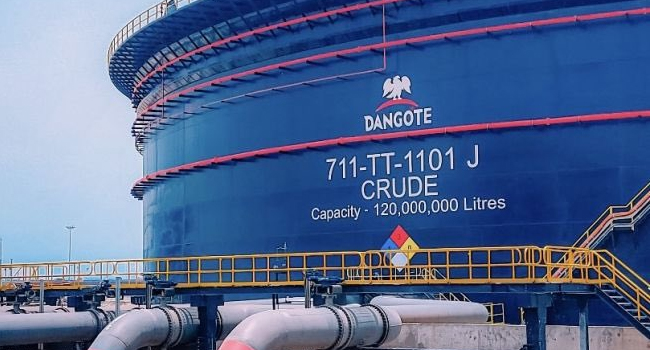
Aliko Dangote is eyeing a 650,000 barrels-per-day refinery in East Africa. The feat marks a major push to expand his refining footprint beyond Nigeria and reduce the continent’s dependence on imported fuel. The industrialist and Africa’s richest man gave the indication while speaking at the Africa We Build Summit in Nairobi, organised by the Africa Finance Corporation.
He disclosed that his group is prepared to replicate the scale and model of its Lagos refinery, provided East African governments offer the necessary support, noting that discussions are still in the early stages but expressed strong confidence in the project’s viability.
He stated that his company’s experience in delivering the Lagos-based refinery proves that such an ambitious project can be successfully executed again. The proposed refinery aligns with ongoing efforts by regional government including Kenya, Uganda, and Tanzania to establish a joint refining hub in the Tanzanian port city of Tanga.
The facility is expected to process crude sourced from across East and Central Africa, including the Democratic Republic of Congo and South Sudan. Dangote also disclosed that expansion work has already begun on his Nigerian refinery, with plans to scale capacity up to 1.4 million barrels per day.
If completed, the facility would rank among the largest in the world and significantly boost Africa’s refining capacity. He stressed the need for Africa to prioritise industrial selfsufficiency, warning that reliance on imports exposes economies to global price volatility.
Citing recent spikes in petrochemical prices, he said local production remains critical to protecting key sectors such as agriculture and manufacturing. Dangote further revealed plans to open up investment in the refinery business to Africans, offering dollar-denominated returns.
He said this would allow the continent to take ownership of critical infrastructure while deepening financial markets.
On project timelines, he indicated that the East African refinery could be delivered within four to five years once agreements are finalised with participating governments.