
Climate change poses significant challenges to education and national development. Schools must be equipped with the knowledge, skills and tools to respond effectively. As one of the greatest global challenges, climate change demands practical and collective action.
Nigeria is highly vulnerable and must be well prepared for its effects. The agricultural sector is particularly at risk.
This has made awareness and education urgent. Governments at all levels, non-governmental organizations (NGOs) and schools have intensified efforts in this direction.
The Universal Basic Education Commission (UBEC) is leading this charge through its commitment to integrating climate change education into the country’s basic education system.
States are not being left behind. UBEC partners with schools to educate teachers, students and other stakeholders on climate change challenges and how to address them.
To support implementation, UBEC has developed national guidelines, a handbook, and a web-based monitoring and evaluation portal to enhance accountability and performance tracking.
Last month, UBEC, in partnership with the African Centre for Environment, Agriculture and Rural Development (ACEARD), launched state-level step-down training on the Greening Schools and Climate Change Education Intervention (GSCCEI) in Abia State. The goal is to strengthen climate change education and environmental sustainability in Nigeria’s basic education system.
Participants included officials of State Universal Basic Education Boards (SUBEBs), Local Government Education Authority (LGEA) desk officers, school administrators, facilitators and other stakeholders. The training aims to build institutional capacity and support nationwide implementation.
GSCCEI is a transformative initiative designed to position schools as centres of environmental stewardship, innovation and resilience. It equips learners with climate literacy, sustainability knowledge and practical green skills to tackle present and future environmental challenges. UBEC describes it as a strategic investment in the nation’s youth and sustainable development.
The intervention aligns with the Federal Government’s education reform agenda to prepare learners for a climate-resilient future. It also supports the National Education Sector Renewal Initiative (NESRI) and Nigeria’s commitments under the UNESCO Greening Education Partnership.
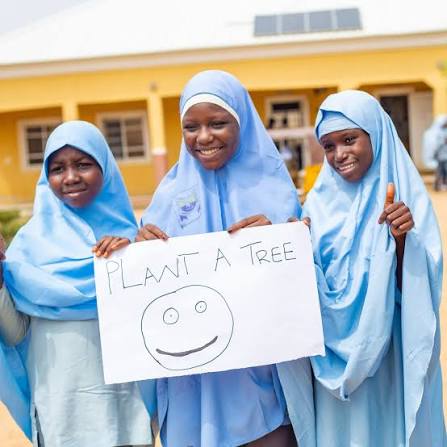
In the same period, the Ondo State Universal Basic Education Board (ODSUBEB), in collaboration with UBEC, held a five-day capacity-building workshop for over 200 teachers and education stakeholders under GSCCEI. The event ended with the launch of the Greening Schools Tree Planting Campaign and the distribution of tree seedlings and agricultural inputs to participating schools.
The workshop provided practical and theoretical knowledge in climate change education, environmental sustainability, agricultural entrepreneurship, and climate-smart agricultural practices.
Schools have a vital role in nurturing environmentally responsible citizens. Climate education must go beyond classroom instruction to include practical activities such as tree planting, environmental conservation, and sustainable school gardening.