
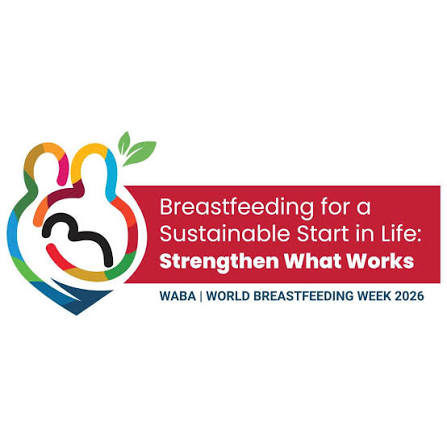
Nigeria has joined the rest of the world to mark World Breastfeeding Week 2026. The annual event runs from August 1 to 7. This year’s theme is “Breastfeeding for a sustainable start in life: strengthen what works”.
The theme focuses on tracking progress, evaluating impact, and scaling proven approaches that improve breastfeeding outcomes.
Across the country, NGOs, Civil Society Organizations and other stakeholders are organizing workshops and symposia. They are calling on governments, health systems, workplaces, communities and families to build on successful experiences and strengthen the campaign.
In Kaduna, the Maternal Accountability Mechanism in Kaduna Initiative, KADMAM, has urged the state government, health institutions and stakeholders to strengthen support systems that enable every mother to initiate breastfeeding early.
The NGO also wants government to support mothers to exclusively breastfeed for six months, and to continue breastfeeding alongside complementary feeding as recommended.
Co-Chair of KADMAM, Garba Muhammad, made the call on Tuesday at a news conference in Kaduna to commemorate the 2026 World Breastfeeding Week.
Muhammad said breastfeeding remains one of the most effective and affordable interventions for improving maternal and child health.
He said exclusive breastfeeding for the first six months provides babies with essential nutrients and antibodies for healthy growth.
“Breastfeeding protects babies against common childhood illnesses, enhances cognitive development, and significantly reduces infant mortality. Continued breastfeeding, alongside appropriate complementary feeding up to two years and beyond, also contributes to better health outcomes for both mother and child,” he said.
Despite progress, Muhammad said many mothers still face barriers to optimal breastfeeding. These include inadequate family and workplace support, misinformation, limited access to skilled counselling, and socio-economic challenges.
He said addressing the barriers requires sustained investment in quality maternal, newborn and child health services, stronger community engagement, and implementation of policies that protect and promote breastfeeding.
“As an accountability platform, KADMAM calls on government, healthcare institutions, employers, traditional and religious leaders, CSOs, the media and development partners to support mothers to initiate breastfeeding early,” he said.
He commended organizations like Project Smile for Humanity Foundation for mobilizing communities through awareness activities, including the World Breastfeeding Walk Campaign.
He urged families and communities to support nursing mothers by creating environments where they can breastfeed confidently and without discrimination.
“Protecting, promoting and supporting breastfeeding is a collective responsibility and a strategic investment in healthier children, mothers, and society. Together, let us strengthen what works and ensure every child has a sustainable start through optimal breastfeeding.”
In Kwara, the state government is urging mothers to feed babies only breast milk for six months as it targets 70% coverage across 16 LGAs.
Prof. Nusirat Elelu, Executive Secretary of the Kwara State Primary Healthcare Development Agency, made the call on Monday.
She said Kwara was among the first states to approve six-month maternity leave and establish creches in ministries. But she added that more must be done.
The state is promoting a “Zero Water” campaign to correct the belief that babies under six months need water. “Breast milk is 88% water and provides all hydration and nutrients. Adding water can introduce contaminants and reduce milk intake,” she said.
Elelu disclosed that all pregnant women in Kwara are entitled to free Multiple Micronutrient Supplements at PHCs. Over 14,423 women have received MMS since January 2026.
“A well-nourished mother produces the best quality milk. I urge every pregnant woman to visit the nearest PHC for her free supplements,” she said.