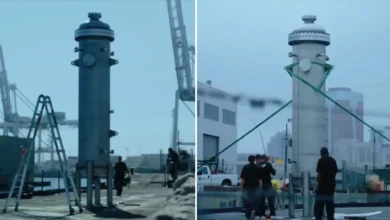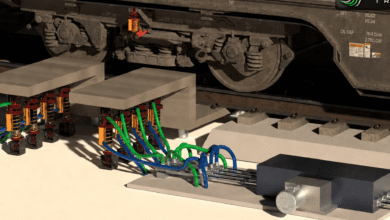

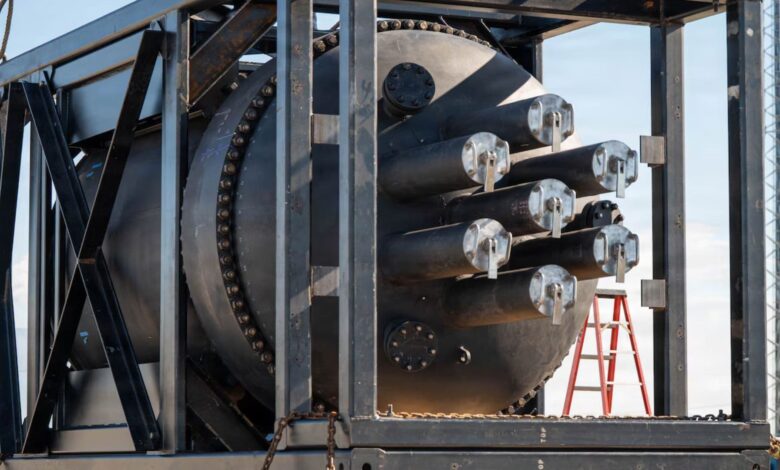
United States Department of War is working towards installing an advanced nuclear microreactor at Naval Weapons Station Crane in Indiana by September 2028. This initiative represents a substantial advancement in the adoption of nuclear power at military installations.
The microreactor will be owned and operated by a private company, supplying reliable power to the Navy base and reducing dependence on the commercial electric grid.
This project will establish the Navy’s first shore-based advanced microreactor and Indiana’s first power-generating nuclear reactor. Naval Weapons Station Crane supports weapons development and defense technology programs that require dependable electricity, particularly during power outages or other challenging circumstances.
The Army is developing the reactor through its Janus Program in collaboration with the Navy and other Department of War entities. Indiana is also participating in the project, which has been under development for over a year with support from state officials.
The army leads the department’s nuclear energy initiatives at military installations. The Navy is establishing the operational requirements for the Crane site while the Department of War Innovation Unit facilitates connections between the program and commercial nuclear technology.
US Aerospace Firm Completes Record-breaking 18,000-mile Trip
Page 4 · Science & Tech
United States aerospace company, Sceye, has completed a record-breaking, trans-Pacific round trip of roughly 18,000 miles (nearly 30,000 km) from New Mexico to Japan, returning with its high-altitude stratospheric platform.
Called Service Test 1 (ST1) mission, the stratospheric platform, launched on August 9, 2026, arrived in Japan 13 days later. While operating in Japan, Sceye demonstrated mobile broadband connectivity to unmodified devices through SoftBank Corp’s core network and HAPS-based edge computing and communication with drones to support the development of a 3D communications network.
“Groundbreaking and historic only begin to describe our ST1 flight.
“This mission proved not only that our technology, vehicle systems, payload, and operational infrastructure are ready for connectivity services, but also that the stratosphere is where the future non-terrestrial infrastructure lies. The stratosphere is what will enable the always-on future – including the promised land of 6G. Together ground, stratosphere, and space – each operating at their optimal strengths, will change the course of humanity,” said founder and chief executive of Sceye, Mikkel Vestergaard Frandsen.
During its journey, the ST1 travelled nearly 30,000km and re-entered continental US on September 4, 2026. The ST1 reached airspace near Sceye’s headquarters in Moriarty, New Mexico, on September 5, 2026, where the firm completed additional vehicle testing and a planned termination and descent.
Conducted in partnership with SoftBank Corp, a leading operator of telecommunications and IT businesses in Japan and globally, ST1 marks Sceye’s first flight to Asia and a groundbreaking milestone toward the commercial deployment of HAPS as stratospheric infrastructure.
ST1 carried SceyeCELL, a first-of-its-kind “cell tower in the sky” designed to deliver wide-area mobile broadband directly to standard devices from the stratosphere. When deployed at full scale, one Sceye HAPS is designed to cover the equivalent area of approximately 500 terrestrial towers, according to a press release.