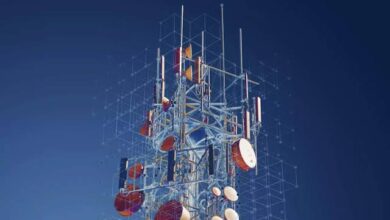


Minister of Communications, Innovation and Digital Economy, Dr. Bosun Tijani made this known on Monday at the commissioning of the new headquarters of the Nigeria Data Protection Commission (NDPC) in Abuja. Tijani said the towers were being deployed under the government’s National Unconnected Communities Access Programme (NUCAP), which targets the deployment of about 3,700 telecommunications towers nationwide. He said it was not part of the 90,000-kilometre nationwide fibre optic network of the government.
He said the first of the towers had been deployed at Kura village near Abuja, with deployment now extended to communities in the Niger Delta. “Before December, at least 200 of those sites will be active. Each of those towers will serve communities of about 5,000 to 10,000 people. “These are people that are currently unconnected. So, at the end of this project, we will be reaching over 20 million Nigerians,” he said. The minister said the federal government was also working to strengthen satellite connectivity through the Nigerian Communications Satellite (NIGCOMSAT), particularly for locations that could not be reached by fibre or terrestrial telecommunications towers. Tijani said the ICT sector’s contribution to Nigeria’s Gross Domestic Product (GDP) had increased to about 21 per cent from between 16 and 18 per cent when the current administration assumed office.
He said the development had created jobs, expanded opportunities and contributed to shared prosperity. According to him, the government is targeting a 25 per cent contribution to GDP if President Bola Tinubu’s administration secured a second term. On the NDPC headquarters, Tijani said the property was recovered by the Economic and Financial Crimes Commission (EFCC) and allocated by Tinubu to the commission. He described the development as symbolic noting that an asset once associated with corruption had been converted into an institution dedicated to protecting Nigerians and strengthening trust in the digital economy.
The minister said the increasing digitisation of government services, businesses and the wider economy, as well as the growing adoption of artificial intelligence, made privacy, data governance and responsible technology use very important. Tijani urged the NDPC to ensure the effective implementation of the Nigeria Data Protection Act (NDPA) and protect citizens’ personal data. National Commissioner of the NDPC, Dr Vincent Olatunji said the commission had evolved from a small unit within the National Information Technology Development Agency (NITDA) into a full-fledged data protection authority.
Olatunji said the commission began with three-office space under NITDA’s E-Government Development and Regulation Department before the Nigerian Data Protection Regulation (NDPR) was issued in January 2019. He said the Nigeria Data Protection Act was eventually signed into law by President Tinubu on June 12, 2023, providing the commission with a stronger legal and institutional framework. According to him, the commission has grown from occupying three rooms at NITDA, to five rooms in Maitama and 20 rooms in Asokoro, and now operates from a 56-office headquarters.
Olatunji said 98 per cent of the commission’s staffers were now certified data protection officers, while 356 Data Protection Compliance Organisations (DPCOs) had been licensed under its public-private partnership model. He said the activities of the commission and DPCOs had contributed to the creation of more than 27,000 jobs within three years. He further said more than 66,000 participants were onboarded through the commission’s virtual privacy academy, while no fewer than 220 training programmes had reached over 90,000 people across different sectors.
Olatunji said DPCOs had generated more than N12 billion in revenue within three years, while the wider data protection ecosystem was valued at over N18 billion. He said the commission had established 17 data privacy clubs in universities, with 6,176 student ambassadors, and had reached more than 250,000 people through various awareness and engagement programmes.
The commissioner said the NDPC had also signed 28 memoranda of understanding with regulators, development partners and data protection authorities in countries including Canada, Morocco, Liberia, Kenya and Ghana. He said the commission had become the leader of the Anglophone body of the Network of African Data Protection Authorities and had received recognition as an outstanding data protection authority in Africa. Olatunji said the commission had also been nominated for three awards at the forthcoming Global Privacy Assembly in Brussels by November.
He described the new headquarters as the largest data protection office in Africa, adding that work was ongoing on the commission’s Lagos office, which he said would be commissioned before the end of 2026. Europe To Develop Satellite Backup For Submarine Cable Networks A new consortium funded by the European Space Agency (ESA) is creating a system called CableShield, that will automatically revert to satellite when a fault is detected in submarine fibre. The ESA is funding the project to the tune of €1.5 million under the Space Systems for safety and Security (4S) programme, within its Advanced Research in Telecommunications Systems (ARTES) programme.
CableShield will be implemented by a consortium led by Belgian multi-orbit satcom operations specialist, Nexat, Colt Technology Services Belgium, and Canadian LEO satellite company Telesat. They reckon satellite connectivity has evolved to the point that it not only provides a backup alternative to cellular connections but even very high throughput submarine cables. “Submarine cables carry an estimated 99% of global connectivity, so when they go down, entire regions can lose access instantly, disrupting business, public services and other critical communications. “Satellite provides the lifeline that keeps essential services online when their primary connectivity is gone.
Having a dedicated multi-orbit platform like Nexat’s ensures service providers can access and manage backup connectivity effectively when it is needed the most,” said chief operations officer of Nexat, Caroline De Vos. On how a satellite possibly provide more than a tiny fraction of the traffic that goes over submarine cables, Nexat said its technology addresses this by pooling and sharing bandwidth from multiple satellite operators. This is automated to the extent that the platform engages with the various satellite providers as much as it needs to, to provide the requisite bandwidth. This will be done through a common orchestration framework that will address detection as well as terrestrial and satellite control layers.
A bunch of ESA standardised APIs will apparently ensure all the various moving parts communicate well with each other. Today starts an 18-month development and validation programme for CableShield, after which the commercial launch is expected. That will coincide with the commercial launch of Telesat’s Lightspeed constellation. Amazon Prime Video Responds To TikTok With Short-form News Clips Amazon Prime Video has added TikTok-style news feed to its clips. The American multinational technology company said on Monday that it was expanding its news coverage to include on-demand news clips offering both local and national stories.
According to the, these will be available on TVs and other living room devices, but will soon roll out to the web and Prime Video’s mobile apps. The clips will be available in the News destination within the Prime Video app in its Trending Topics and the Local News carousels, joining Prime Video’s existing local, national, and world news coverage from a number of major providers, which are available to everyone in the US regardless of whether they have a Prime subscription. Amazon could not yet confirm whether the clips on mobile would be oriented for vertical video or not, only that they would be considered short-form content on iOS and Android.
While TikTok is better known as an entertainment destination, it’s also, along with Instagram, increasingly a place where younger people get their news. Gen Z in particular often watches news creators and influencers on shortform apps, including YouTube Shorts. Amazon, which doesn’t have a true social destination of its own, is instead adding shortform video to Prime Video, in hopes of capturing Gen Z’s attention. But Gen Z viewers are drawn to these social apps not necessarily because of the length of the clips, but rather because of how the information is presented. Based on findings from Pew Research, these younger news consumers want shortform news content that “feels organic, not overproduced.”