
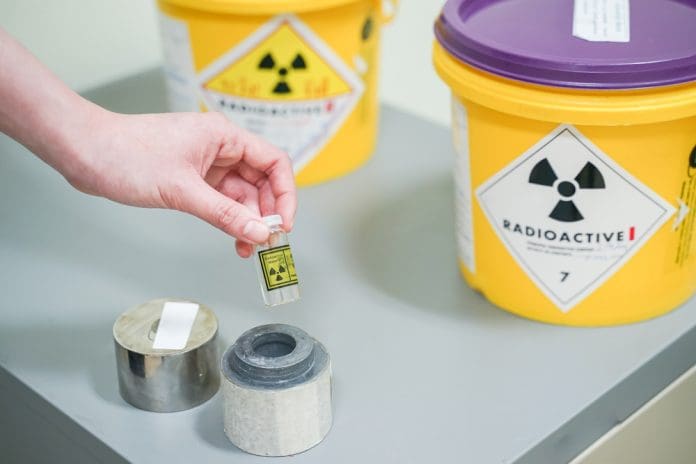
The European Radioisotope Valley Initiative (ERVI) sets out a coordinated framework for investment, research and production across the EU, with focus on expanding domestic capacity, accelerating new technologies, and addressing vulnerabilities across the radioisotope supply chain. The commission believes the initiative would improve long-term supply security while reducing reliance on third countries, particularly Russia. It will also seek to ensure Europe can meet rising demand for medical radioisotopes while maintaining its position as a major global producer and exporter.
Europe targets vulnerabilities in radioisotope supply More than 10 million medical procedures involving radioisotopes are carried out across the EU each year, predominantly in oncology and cardiology. The continent has built an extensive network capable of producing and distributing these materials to hospitals and patients on a daily basis. The EU is currently the world’s largest producer of medical radioisotopes and exports approximately half of its output.
However, that position masks several vulnerabilities. Parts of the supply chain remain dependent on overseas suppliers, while ageing production infrastructure requires significant investment. European producers also face growing competition from alternative suppliers as worldwide demand increases and new radioisotope-based therapies emerge. ERVI aims to address these pressures through five strategic priorities and 10 actions covering research, investment, supply chain resilience, international cooperation, and regulatory issues. Investment in next-generation medical radioisotopes Research and innovation will form a major part of the programme.
The commission plans to support the development of next-generation medical radioisotopes, radiopharmaceuticals and production technologies, to move promising research into clinical and commercial use more efficiently. A Strategic Research and Innovation Agenda (SRIA) will be developed to align scientific programmes more closely with market requirements and patient needs. Existing European funding and investment mechanisms, including the European Innovation Council and initiatives supporting innovative nuclear technologies, could also attract public and private capital. At the same time, the commission wants Member States and industry to invest across the wider value chain.
Among the priorities are establishing European production capacity for metallic High Assay Low Enriched Uranium (HALEU) and increasing domestic production of stable isotopes that are currently sourced from Russia. Upgrades to existing research reactors and the development of new production facilities are also envisaged. Better monitoring of supply and demand Another strand of ERVI will focus on improving visibility across the European market. The commission plans to assess future investment requirements and strengthen monitoring of supply and demand trends.
This work will build on the European Observatory on the Supply of Medical Radioisotopes and involve Member States and industry stakeholders. Better market intelligence could help policymakers and producers anticipate potential shortages and identify where additional capacity is required before supply disruptions affect healthcare providers. The strategy will also make use of EU mechanisms developed to address shortages of essential medicines.
While ERVI places greater emphasis on European production, the commission is not seeking to make the supply chain entirely selfcontained, as it pursues cooperation with trusted international partners to diversify sources and support scientific and industrial collaboration. Partnerships with the UK and US are expected to be particularly important in establishing a resilient supply chain for metallic HALEU.