
Nigeria must expand and modernise its pipeline network to unlock its gas potential and reduce integrity and environmental risks, experts have said.
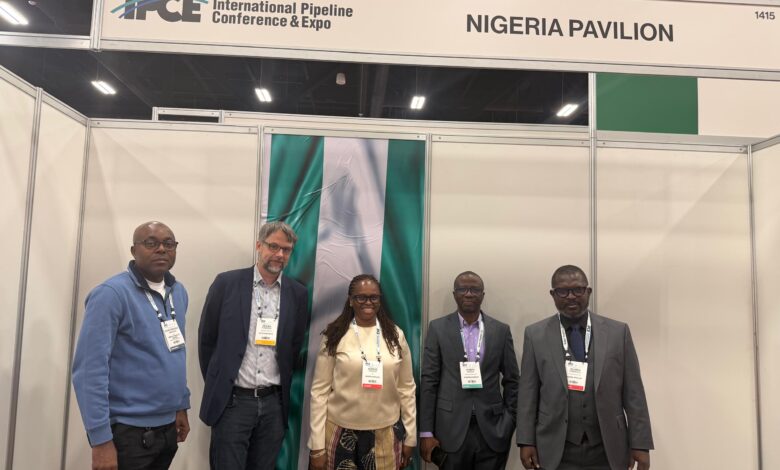
The call was renewed on Thursday at the 2026 International Pipeline Conference and Expo in Calgary, Canada.
According to Dr Eloho Amagada, CEO of Amelin Projects Ltd., Nigeria holds substantial gas resources but lacks sufficient infrastructure to link supply with demand.
Nigeria’s proven reserves stand at 215.19 trillion cubic feet (TCF), while its pipeline network exceeds 2,500 kilometres. Developing the network will require huge capital, estimated at about $22 billion.
Amagada said stronger pipelines would support power generation, manufacturing, fertiliser, petrochemicals and other gas-based industries.
Nigeria supplied about 4.7 billion cubic feet of commercialised gas daily in 2025, with domestic supply accounting for 2.1 billion cubic feet.
“No decade of gas without a decade of pipeline infrastructure,” he said. He warned that ageing pipelines pose integrity challenges, as defects worsen under operating and environmental conditions. Amelin Projects recently examined a 55-kilometre pipeline and found over 3,000 defects, including sections with substantial wall loss.
Operators must replace reactive maintenance with risk-based systems that identify defects before failures occur, he said. Digital monitoring, leak detection, regular inspection and artificial intelligence should be enhanced to improve surveillance.
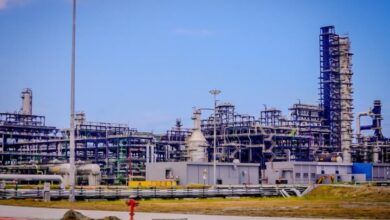
The 130-kilometre Obiafu-Obrikom-Oben (OB3) pipeline, which uses Horizontal Directional Drilling to cross beneath the River Niger and carry up to two billion cubic feet daily, shows how technology can overcome geographical challenges.
“The opportunity is not simply more pipelines; it is creating an entire pipeline industry,” Amagada said. Every additional kilometre creates demand for inspection, engineering, integrity monitoring and maintenance services.
Federal Government plans project 10 billion cubic feet daily by 2027 and 12 billion cubic feet daily by 2030, targets that depend on pipeline capacity.
Also speaking, MD of Westend Diamond Energy Ltd., Mr Reuben Temerigha, said maintenance should be prioritised by failure risks, not age alone. “Assessment priorities should follow risk rather than a universal age threshold,” he said.
Inspection results should be compared with operating records and field checks, considering impacts on communities, waterways and habitats, as unaddressed anomalies could become environmental emergencies.