

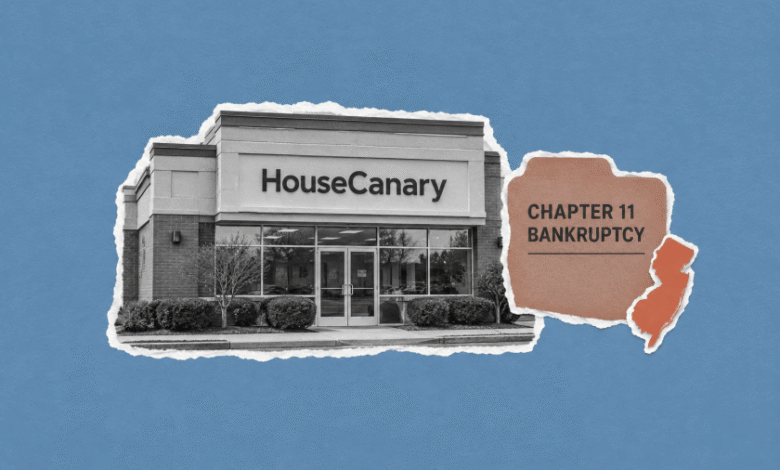
Earlier this summer, the company made waves in the industry by announcing a significant deal with search giant Google to expand real estate listings on the search platform nationwide. The filing by the San Francisco-based firm was seemingly timed to prevent secured creditor, Ocean II PLO LLC, from holding a public foreclosure sale in California, which was scheduled for Tuesday, attorney Joseph H. Lemkin wrote on Stark & Stark law firm’s blog yesterday. All of HouseCanary’s assets and property, including deposit and security accounts, equipment, inventory, investment properties and proceeds, would have been tied up in the foreclosure sale, Lemkin noted.
Assets excluded from the foreclosure notice were claims and proceeds related to litigation HouseCanary had been involved in with Amrock Inc. and Quicken Loans Inc. in Texas, dating back to 2016 and 2018, respectively. In a countersuit against Amrock, HouseCanary alleged that its home valuation tech and other trade secrets had been misappropriated. In 2018, a jury awarded HouseCanary more than $700 million in damages, but that verdict was overturned on appeal, prompting a retrial. That second trial, conducted in March 2026, resulted in a smaller award of $175 million. Since those proceeds were excluded from the foreclosure sale notice, that award “may be subject to a separate financing or lien structure,” Lemkin wrote, meaning it may become an area of focus in the bankruptcy case.
A status conference in the Chapter 11 case has been scheduled for November 12, 2026. The Chapter 11 filing states that funds will be available to distribute to HouseCanary’s unsecured creditors and that both the company’s estimated assets and estimated liabilities sit between $100 to $500 million. It also reveals that the noninsider creditors with the 30 largest unsecured claims in the company include Black Knight Technologies, the National Association of Realtors, Amazon Web Services, Google Ads and Facebook Ads. When HouseCanary announced its move to distribute listings nationally via Google in June, many real estate professionals wondered how this might disrupt the industry.
The company said it wanted to “work with every MLS” in order to get all listings for sale visible on Google, and that it had been working with the search giant for more than three years to make sure they got it right, including keeping data protected from large language models. With its bankruptcy filing, questions arose about how Google’s listing program might continue — questions that HouseCanary addressed at a Thursday afternoon hearing. Approved for financing to reorganize: Following the Sept. 24 hearing, HouseCanary announced that the court had approved the relief that it had requested, which will allow the company to operate normally while undergoing Chapter 11 reorganisation.
The relief will support the company’s customer programs, employee obligations and regular business operations, plus access to debtor-in-possession financing, HouseCanary said in a press release. Another hearing will be scheduled in October to determine whether additional debtor-in-possession financing should be approved. “For now, HouseCanary expects its services to continue without interruption. While the reorganisation occurs, the company’s “focus remains unchanged: serving our customers, delivering trusted real estate data and technology and executing on the significant opportunities ahead of us,” HouseCanary chief executive officer, Chris Rediger said.
Rediger added that the company believes the process will reposition HouseCanary with “a stronger balance sheet and greater financial flexibility for our next phase of growth.” HouseCanary said it expects any allowed creditor claims to be paid in full by way of the reorganisation process, pending court approval.