
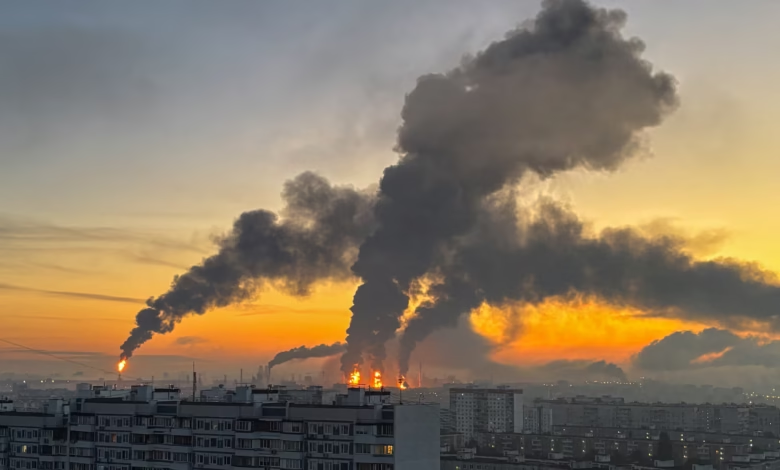
Ukraine’s General Staff said in a Telegram statement that its forces attacked Lukoil PJSC’s Volgograd refinery overnight, causing a fire. The plant’s four primary processing units, a hydrotreatment unit, six storage tanks and a loading rack were damaged, according to the statement. The Volgograd refinery is located about 900 kilometers (560 miles) southeast of Moscow, and has a nameplate processing capacity of about 300,000 barrels of crude a day. Lukoil didn’t immediately respond to a Bloomberg request for comment. Earlier, local governor Andrey Bocharov said drones attacked the southern industrial zone of Volgograd, home to the refinery, sparking a fire. The governor didn’t specify whether the plant was hit nor detail the damage.
The latest strike means that since the start of November, Ukraine has attacked nine Russian oil refineries, including the Omsk facility, the nation’s largest, according to a Bloomberg tally based on statements from officials in both nations and people familiar with the incidents. Together, they have the nameplate capacity of around 2.6 million barrels a day, Bloomberg calculations show. That’s almost 40 percent of the nation’s total crude-oil processing capacity, based on government data. Kyiv resumed its campaign of attacks against Russia’s oil refineries in late October after an almost two-week pause that coincided with calls for calm from US President Donald Trump as he sought to bring down fuel prices before the midterm elections.
The new wave of strikes, designed to reduce the Kremlin’s energy revenues that finance the war, come as the US has intensified its efforts to mediate a peace deal. Earlier this week, White House envoys held separate meetings with Russian President Vladimir Putin and Ukrainian leader Volodymyr Zelenskyy. While there was no decisive breakthrough, Ukraine welcomed progress made during the discussions, while the Kremlin said Russia expects another round of the talks “fairly soon.” Meanwhile, Moscow continues to attack Ukrainian infrastructure, including ports, power plants and railroads, as well as water supply facilities and residential buildings.
Its strikes on Ukraine’s agriculture assets are also hitting a top source of Kyiv’s export revenue and threaten food security. The repeated drone attacks are putting more pressure on Russia’s refining operations, with some regions of the nation already reintroducing fuel rationing. A similarly concentrated Ukrainian drone campaign in the summer forced the government in Moscow to ban most exports of diesel, gasoline and jet fuel and incentivise imports of some petroleum products. Russia has classified almost all oil-related data following its invasion of Ukraine, which makes it difficult to assess the extent of the drone-related damage to the nation’s crude processing.
However, not all of the nameplate capacity may be affected: some Russia refineries continued to process crude at reduced runs following earlier drone strikes. Earlier on Friday, the International Energy Agency, in its monthly oil market outlook, said that Russia’s oil-processing operations are set to be “severely curtailed” by Ukrainian attacks through year-end, with the strikes weighing on Russia’s ability to export diesel.