

Drogue, a startup that has kept a low profile until now, is building a system that harvests heat from the ocean to power data centres on board floating vessels. According to founder and chief executive officer, Sam Sipe, the first prototype should be bobbing around the ocean, crunching bits, less than two years from now. According to Sipe the goal is to help data centre developers deploy servers in AI-friendly timelines. “The data center industry is a real estate game, and so they’re playing on 8- to 10- year timelines, including interoperability with utilities and [independent system operators]” that manage regional power grids. “AI demand has increased 10x in just the last three years. It’s completely incompatible,” he said.
Drogue was founded just six months ago in Washington, D.C., and the startup told TechCrunch exclusively that it has already raised $20 million, including from XYZ Venture Capital, Toyota Ventures, Tamarack Global, Dream, FDVC, Garuda Ventures, Flexcap, Boost VC, and Slow Ventures, among other investors. In those six months, Drogue has designed a multi-megawatt prototype that will be installed on a traditional oceangoing ship and sent out to sea in early 2028. Future versions will be built on floating structures that more closely resemble offshore oil platforms. To Sipe, the decision to turn to the ocean was obvious. After years flying E-2D Hawkeyes off U.S. Navy aircraft carriers, he had an appreciation for the ocean’s immense power. “Most people think, oh, ocean — hard waves, storms, corrosion, biofouling.
And I just see this majestic place and resource that we just ignore,” he said. As the planet warms, the oceans have been absorbing an additional 5.8 million terawatt hours of energy every year. By comparison, all of human civilisation uses about 180,000 terawatt-hours each year. If Drogue were to take some, surely the ocean wouldn’t miss it. The startup’s technology works like a heat pump run in reverse. A heat pump uses electricity to move heat from one place to another; Drogue’s system instead uses a difference in temperature to generate electricity. This approach, known as ocean thermal energy conversion, or OTEC, was first developed in the 1950s. Surface waters are warmer, heated by the sun, while downdeep temperatures are much colder, about 39°F on average (4°C).
“There’s basically no amount of heat we can pull out of that that will collapse that temperature differential,” Sipe said. To leverage the temperature differential, the startup’s system draws in warm surface water, uses it to cool the data centers, and then sends the now-warmer water to boil ammonia, a chemical that turns to gas at -28°F. That ammonia gas is then sent through a turbine to generate electricity. Once through the turbine, it courses through a condenser, which turns the gas back into a liquid. There, cold water drawn from 1,000 meters deep passes over the condenser’s fins to absorb the heat.
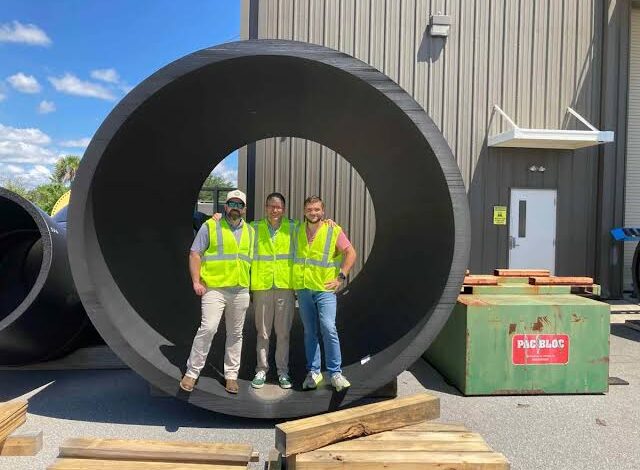
The warmed water is then released, and dissipates into the ocean. The ammonia gets sent back to the start of the sealed loop, and the cycle repeats. The basic idea was tested in the 1980s but tossed aside. “A lot has changed since the ’80s, specifically manufacturing techniques around the pipe and the heat exchangers,” Sipe said. To find out why, Sipe sought out people who had worked on those early efforts. “I just talked to everyone, basically interviewed them and figured out what went wrong, what went right, what would you do next. And everyone was like, dude, this stuff works. It’s just a matter of being able to raise enough capital to build something big enough, because there’s a sweet spot,” he added.