
Researchers have found an injectable biomaterial that turns stroke-damaged areas into hubs of repair.
The new treatment came with an experiment that help mouse brains grow new blood vessels and nerve fibers while restoring near-normal movement.
A stroke can leave behind in human body more than damaged brain cells. In severe cases, it creates an empty cavity where living tissue once carried signals, supplied blood, and controlled movement.
Duke University researchers are now testing an injectable material designed to turn that biological void into a hub of repair for such cells.
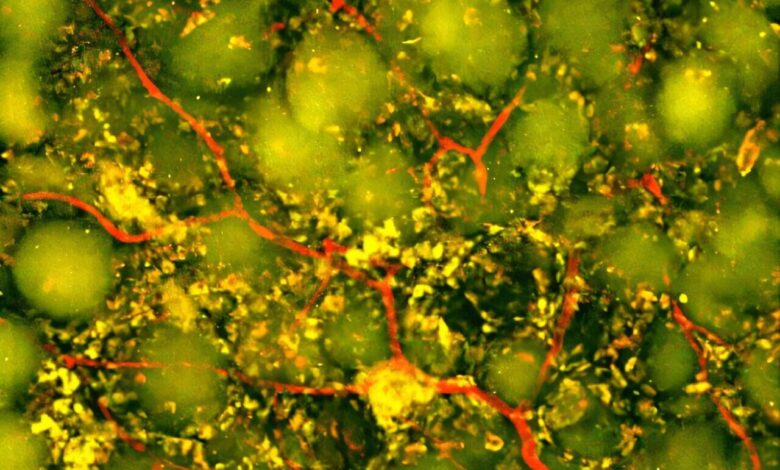
In mice, the treatment drew immune cells into the stroke cavity and helped organise them into a coordinated healing response. New blood vessels spread through the injured area, nerve fibers became more abundant, and the animals regained motor abilities that approached those of healthy mice.
In the findings published in Cell Biomaterials journal, the material was injected directly into the damaged region five days after the stroke, meaning it was tested as a repair strategy rather than an emergency treatment.
Most strokes occur when a clot cuts off blood flow to part of the brain. Clot-dissolving drugs and procedures that physically remove the blockage can save threatened tissue when delivered quickly. Once brain cells have died, however, restoring circulation cannot bring them back.
A major ischemic stroke may destroy enough tissue to leave a fluid-filled cavity. Rehabilitation can train surviving brain networks to take on new roles, but medicine currently has no established way to reconstruct the missing region itself.
“Once brain tissue has been lost, restoring blood flow is no longer enough. Our goal is to engineer the injured space so that immune, vascular, and neural repair processes can begin to work together,” said Robert Plonsey Distinguished professor of Biomedical Engineering at Duke, Tatiana Segura.
For the injectable scaffold for brain repair, rather than trying to manufacture replacement brain tissue, Segura and his team developed a temporary framework that encourages the body to do more of the rebuilding itself.
The treatment is based on MAPS, or microporous annealed particle scaffolds. These injectable materials are assembled from tiny hydrogel particles that connect after delivery while leaving open spaces between them.
Unlike a solid gel, the porous structure gives cells room to enter, move, and form new tissue. Microporous scaffolds can support cellular infiltration and blood vessel growth without waiting for the entire material to break down first.
The research team had previously investigated similar materials for stroke repair. In the new work, the researchers added biological instructions intended to shape the immune response inside the scaffold.
Those instructions came from astrocytes, star-shaped cells that support neurons, help regulate the brain’s environment, and react rapidly to injury.
Astrocytes communicate partly by releasing extracellular vesicles, or EVs. These nanoscale packages transport proteins, lipids, and genetic material between cells.
The team grew astrocytes in the laboratory and exposed them to different signaling molecules. They then collected the EVs produced under those conditions and tested whether the packages could attract immune cells and encourage tissue repair.