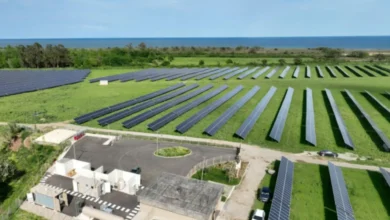

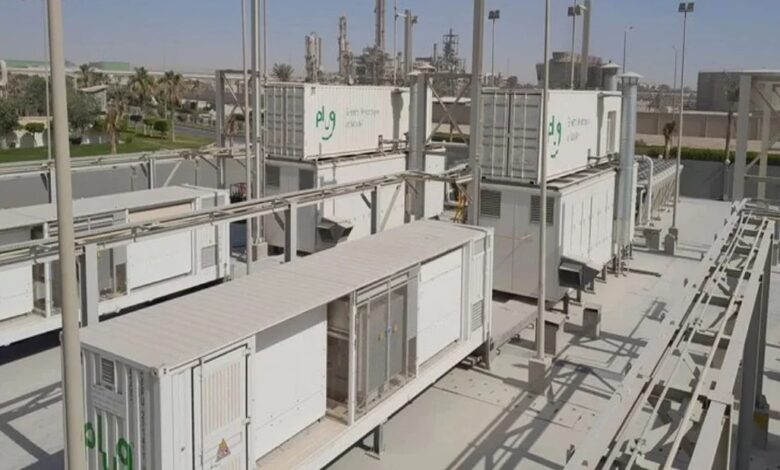
Africa’s first integrated green hydrogen facility at Walvis Bay, combining solar power, hydrogen production and battery storage for industrial and transport use.
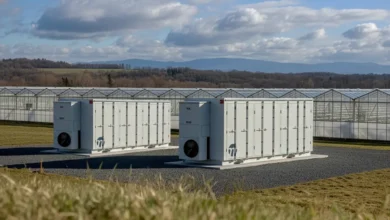
The CMB Tech Namibia facility uses a 5MWp solar park, five megawatt proton exchange membrane electrolyser and a 5.9MWh battery storage system to produce green hydrogen offgrid.
The project is being positioned as Africa’s first fully integrated green hydrogen facility, with its initial output earmarked for industrial and transport applications, including dualfuel trucks, generators and hydrogen-powered freight locomotive.
In a statement issued yesterday, Siemens sub-Saharan Africa chief executive Sabine Dall’Omo says the facility demonstrates that large-scale clean energy production can already be achieved on the continent.
“Africa’s first fully integrated green hydrogen facility demonstrates that large-scale clean energy production is not future ambition, but a presentday reality,” Dall’Omo says.
The facility is located at Walvis Bay, where solar power for an electrolyser that separates water into hydrogen and oxygen.
The hydrogen can subsequently be combined with nitrogen to produce ammonia, which could eventually be used as a marine fuel.
CMB Tech chief technology officer Roy Campe describes the facility as a “living lab” for an integrated hydrogen economy.
“The facility includes a solarpowered off-grid electrolyser for renewable hydrogen production, a refuelling station for hydrogen-powered vehicles and industrial applications, and an on-site Hydrogen Academy for local talent development,” Campe says.
The 6.5-hectare solar park currently has about 7 000 solar panels. Campe says the company intends to significantly expand the facility, with a long-term target of reaching 250MW and eventually 500MW of capacity.
Campe said the broader ambition was to position Namibia as an energy-exporting hub.
“We want to turn Namibia into a global energy hub and export energy to Europe and the rest of the world,” he said.
The project’s initial focus is not export, but creating domestic demand for the CMB Tech is using the hydrogen itself in its industrial operations, effectively providing an initial off-taker for the fuel.
Dall’Omo says securing demand is a major challenge facing hydrogen projects globally.
“Many green hydrogen projects are stalling because, while they invest heavily in solar energy and green hydrogen production, there is often no commercial offtake agreement in place to secure demand for the hydrogen produced,” she says.
The facility is expected to expand into port-related applications, including the production of green ammonia for potential maritime use.
This could allow hydrogenderived fuels to be used in shipping, one of the sectors considered difficult to decarbonise.
Senior manager for southern Africa at Afrika-Verein der deutschen Wirtschaft, Wiebke Polomka said the project could provide a practical pathway for reducing emissions in transport and logistics.
“Beyond its role as an energy production facility, the project illustrates how green hydrogen can accelerate the decarbonisation of transport Polomka says.
Local skills development is another component of the project.
The facility employs 25 people, of whom 24 are Namibians. Workers have received training through the Hydrogen Academy, which is intended to develop skills among drivers, technicians and scientists.
Walvis Bay mayor, Johannes Shimbilinga said the project could help build a local skills base around the emerging industry.
“The project is training a new generation of engineers and technicians. This creates a sustainable pipeline of local expertise, positioning Namibia as an exporter of not just green molecules, but also the technical knowledge required to operate and maintain a hydrogen economy,” Shimbilinga says.
Siemens supplied the electrical, automation and safety systems for the facility.
Dall’Omo said the integration of the various systems was critical to ensuring reliable operation.
“The CMB Tech plant can only deliver on its promise if all technologies operate seamlessly as one,” she says.