Australia’s Utility PV Curtailment Drops To 22% In Sept As Renewables Output Hits 5.44TWh

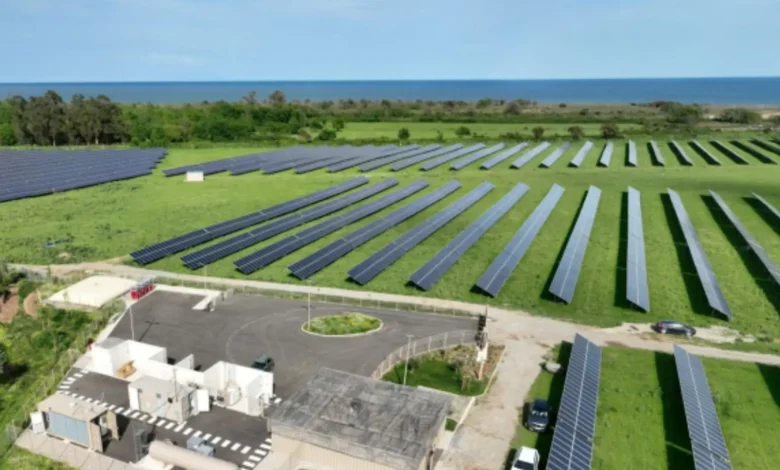
Utility-scale solar drove much of the state-level growth. New South Wales, Queensland and Victoria each recorded their highest monthly utility PV generation on record for September, at 841GWh, 645GWh and 267GWh, respectively, Dixon wrote in a detailed LinkedIn post last week. Victoria led all states on combined output, generating 1.52TWh across both technologies, comprising 1.25TWh from wind and 267GWh from utility PV. The top-performing utility PV assets for the month were concentrated in New South Wales and Queensland, each recording a 35 percent AC capacity factor. This includes ACEN Australia’s Stubbo stages 1 and 2 in NSW, Hana Financial Investment’s Columboola in Queensland, and the ENEOS Group and Sojitz Corporation joint venture at Edenvale, also in Queensland.
Wind performance was led by Potentia Energy’s Flat Rocks in Western Australia at 55 percent, followed by two Tasmanian assets, Atmos Renewables’ Cattle Hill at 49 percent and the Atmos Renewables and Palisade Investment Partners joint venture at Granville Harbour at 48 percent. Wind generation moved in the opposite direction to solar nationally, falling or holding flat in every NEM state except Queensland. Total wind output was down by approximately 86GWh compared with September 2025. Utility PV curtailment fell to 22 percent of available generation in September 2026, down from 26 percent in September 2025, while wind curtailment held broadly flat at around 13 percent.
The improvement extends a trend already visible in Rystad’s August data, when NEM utility PV curtailment fell to around nine percent of available generation, down from roughly 18 percent a year earlier, as utility-scale solar generation climbed to a combined 4.99TWh with wind. September’s curtailment rate remains structurally higher than August’s, reflecting the seasonal pattern in which curtailment tends to peak in spring as solar output rises faster than underlying demand, but the year-onyear direction in both months points in the same direction.
Spot prices stayed low across the NEM during September, with every state averaging below AU 43/ MWh) and the three southern states, South Australia, Tasmania and Victoria, all below AU 110/MWh, the highest recorded for the month of September since the market began. Gas-fired generation across the NEM totalled just 455GWh for the month, the first time September gas output has fallen below 500GWh.
Investment activity continued alongside the generation data. Several utility-scale projects reached financial close during September, including Atmos Renewables’ 470MW Parron wind farm and Foresight Group’s 130MW wind farm, both in Western Australia, as well as Birdwood’s 400MW/1,860MWh battery storage project. Atmos Renewables also reached financial close on the 400MW/1,600MWh Teebar Battery in Queensland as the month closed out. That pace of deployment builds on a broader run of record-setting data across Australia’s clean energy sector through 2026.
AEMO’s FY26 annual report recorded 9.1GW of new generation and storage capacity reaching full output in the NEM over the year, more than double the volume achieved in FY25, with the broader connections pipeline growing 42 percent to 75.4GW. The Clean Energy Regulator separately reported its strongest quarter yet for rooftop solar installations, household battery uptake and large-scale solar investment, with 1.8GW of generation capacity reaching final investment decision, the strongest quarterly result since the regulator began tracking investment activity.