Scientists Develop Tiny Wearable Device That Could Detect, Reverse Fentanyl Overdose

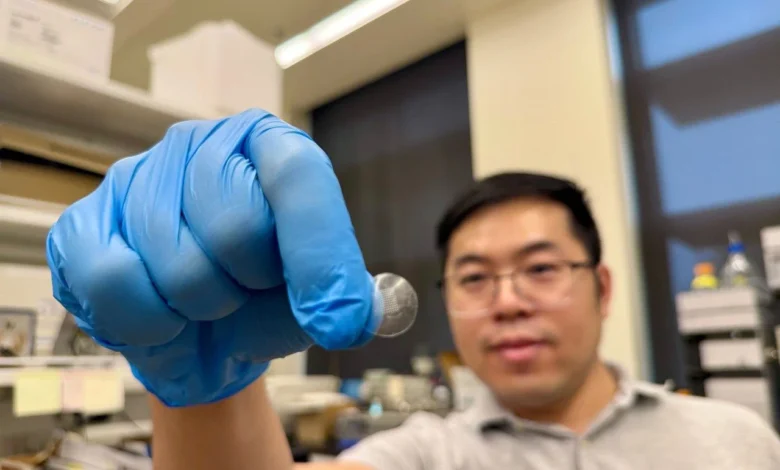
Scientists have developed a tiny wearable patch that can detect fentanyl and automatically release naloxone that offers a new way to prevent unwitnessed opioid overdose deaths.
The tiny device is designed to recognise dangerous fentanyl exposure and automatically release an overdose reversal medication, potentially providing help without herculean health routine.
The researchers in Virginia Tech’s Department of Biological Systems Engineering developed the wearable microneedle device to detect fentanyl in the body and deliver naloxone, a medication that reverses the effects of opioid overdose. If further testing succeeds, the technology could eventually provide an automated response to overdoses that happen without a bystander nearby.
Called the iNal patch, the device was created by researchers led by Wujin Sun, an assistant professor of Biological Systems Engineering, in a department within both the College of Agriculture and Life Sciences and the College of Engineering. Their findings were recently published in Advanced Science.
“In general situations when there’s an overdose, we need to have someone there to save you. In this case, we don’t need a bystander because we’re protected all the time,” Sun said.
The patch responds directly to fentanyl.
The patch contains an array of 121 microscopic needles that reach fluid just below the skin. When the device is applied, the needles extend only far enough to access this fluid while causing minimal tissue damage.
It also contains porous silica nanoparticles filled with naloxone, which blocks opioid effects. Molecular gates that are sensitive to fentanyl cover the openings in these particles.
When fentanyl reaches the patch, those gates open and allow naloxone to enter the body. The amount released rises as fentanyl concentrations increase. Only some gates open during each response, leaving additional naloxone stored in the patch in case fentanyl exposure occurs again.
First author of the paper and a visiting instructor in Virginia Tech’s Academy of Integrated Science, Penghui Zhao led the patch’s development and testing.
“One of the greatest technical challenges was finding the right combination of biomaterials and microneedle technology to achieve reliable, on-demand drug release while maintaining mechanical strength, biocompatibility, and responsiveness,” Zhao said.