

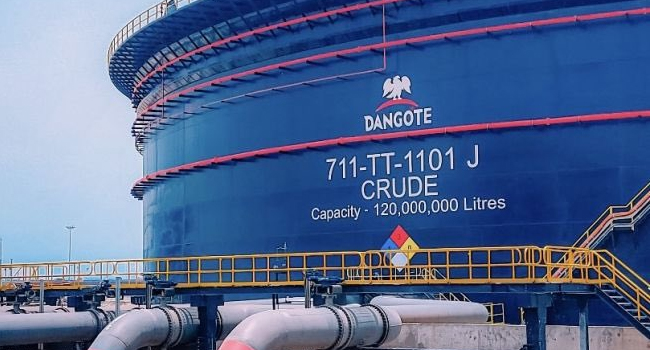
Dangote Petroleum Refinery & Petrochemicals has announced another reduction in ex-depot price of Premium Motor Spirit (PMS). The slash marks the company’s fourth price cut within a month, as said it continues to pass lower production costs to consumers despite still processing crude oil purchased at significantly higher international prices.
The latest N50 per litre reduction brings the cumulative decrease in the refinery’s PMS ex depot price to N200 per litre since May 30, 2026, reducing the gantry price to 1, 075. Over the same period, the refinery has reduced the ex-depot price of Automotive Gas Oil (AGO) by N300 per litre and Jet A1 aviation fuel by N520 per litre.
The company said the successive reductions demonstrate its commitment to ensuring Nigerians benefit from favourable market developments while maintaining the long-term sustainability of domestic refining operations.
The company in a statement on Thursday explained that petroleum product pricing cannot mirror daily movements in international crude oil markets because crude is purchased weeks, and sometimes months, before it is processed.
According to the refinery, the petroleum products currently being supplied to the market are being produced from crude inventories acquired during periods of substantially higher prices.
Dangote disclosed that the average landed cost of crude processed stood at approximately US$124.80 per barrel in May and US$95.25 per barrel in June, compared with the current international benchmark of about US$71.01 per barrel. The refinery also clarified that its crude procurement costs are not based solely on the headline ICE Brent benchmark commonly quoted in the media.
Rather, crude is purchased on a Dated Brent basis together with applicable market premiums, freight and logistics costs, resulting in actual feedstock costs that differ materially from benchmark prices.
Despite the sharp increase in crude acquisition costs during the period, Dangote Refinery said it deliberately refrained from transferring the full impact to consumers, choosing instead to absorb a significant portion of the additional costs in order to support market stability and cushion Nigerians from the volatility in global energy markets.