
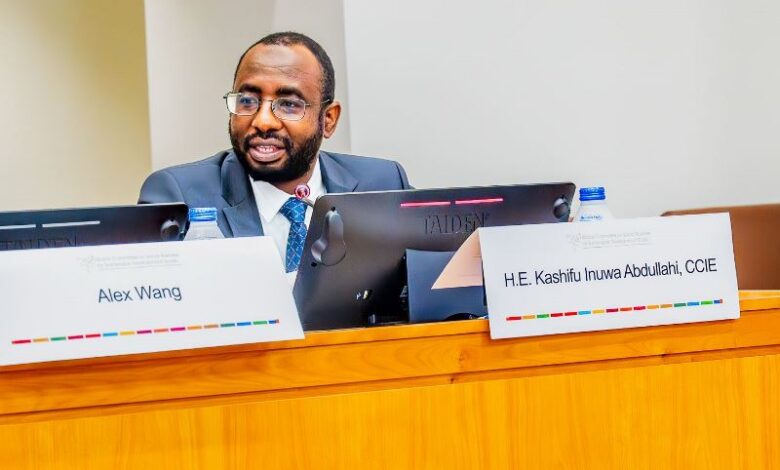
The Director General of the National Information Technology Development Agency, Kashifu Inuwa Abdullahi, got it right at the 2026 Artificial Intelligence Summit in Abuja. His call for inclusive Artificial Intelligence that expands human possibilities rather than concentrating power in the hands of a few is exactly the conversation Nigeria needs to be having. For too long, technology in Nigeria has spoken the language of Lagos and Abuja, while the rest of the country watches from a distance. Abdullahi’s framing — that AI must serve the farmer in Kebbi, the trader in Aba, the teacher in Sokoto and the entrepreneur in Bayelsa — is powerful because it reframes AI from an elite toy to a national utility.
That is the right vision. But vision alone does not build an AI economy. Nigeria is at a critical inflection point. AI is no longer a futuristic concept; it is reshaping agriculture through precision farming, finance through credit scoring, health through diagnostics, and education through adaptive learning.
If we get inclusiveness right, AI could be the great equaliser that bridges Nigeria’s productivity gap. If we get it wrong, it will deepen inequality, creating an AI-rich and AI-poor divide that mirrors our existing digital divide. The building blocks Abdullahi listed are commendable: research grants, capacity-building programmes, a national AI policy framework, startup support, and collaboration with the Ministry of Communications, Innovation and Digital Economy and universities. The recently enacted National AI Strategy, with its focus on data governance, ethics, transparency and accountability, also provides a needed guardrail.
However, three critical tests will determine whether this inclusive AI agenda succeeds. First is infrastructure. You cannot build inclusive AI on exclusive internet. Rural broadband penetration, affordable compute power, and reliable electricity remain prerequisites that NITDA cannot solve alone.
Second is local data. An AI trained on foreign datasets cannot serve the farmer in Kebbi. Nigeria must urgently invest in digitising and curating local languages, agricultural data, health records and trading patterns — with strong privacy protection — to build models that understand our reality. Third is talent at scale.
A few thousand trained developers will not cut it. Inclusiveness means integrating AI literacy into our basic education curriculum and polytechnic system, not just elite university labs. The summit brought the right people to the room. The real work is ensuring the resolutions leave the room and reach the markets, farms, and classrooms where Nigeria’s future will actually be decided.