
At least 90 percent of the current electricity generation is dependent on renewable sources, though solar and wind farms produce electricity only when the sun is shining and the wind is blowing, indicating continued fluctuation of power supply.
A pilot project in the US state of Delaware has shown that owners of electric vehicles (EVs) could make thousands of dollars each year by allowing their parked cars to serve as part of a giant collective battery that stores electricity when there is high supply and distributes it when there is high demand. Some data suggests that the average EV is driving as little as 5 per cent of the time.
Otherwise, it is often parked and plugged into the grid. This means that, rather than building giant battery farms, electric companies could balance the grid by drawing power from these cars when usage peaks in the morning and evening, then recharging them during the day, says Willett Kempton at the University of Delaware, who led the project.
EV owners could sell electricity at a premium while still saving the grid money. “An electric vehicle plugged in 95 per cent of the time that it’s not driving can provide storage for the grid at about one-tenth the cost of building batteries,” says Kempton. “[That could] help increase the reliability of any electric system and increase the capability of us to put more and more renewables on the system.”
In the project, four Ford EVs owned by energy company Delmarva Power were retrofitted to supply electricity back to the power system through vehicle-to-grid (V2G) charging. Kempton and his colleagues monitored their V2G charging throughout 2025. Given the amount of electricity the cars supplied to the grid, each EV could have earned as much as $3359 annually if that energy was sold at the market price.
When Kempton became one of the first to investigate V2G back in 1997, it made so much sense that he thought it would become a commercial reality within a few years. But almost 30 years later, V2G largely exists in a handful of test programmes in the US, Europe, Japan and China.
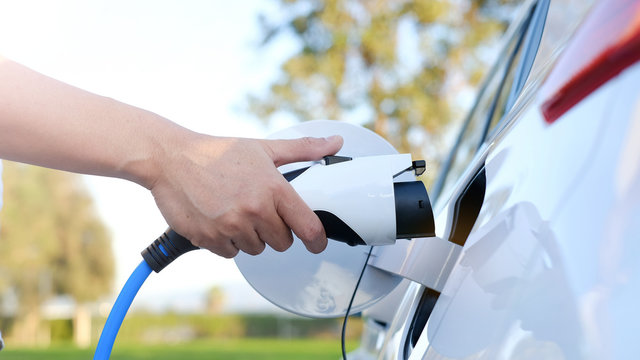
A key reason for this is that reversing the flow of energy from the grid to the car turns out to be surprisingly complex, because it requires vehiclemakers, utility companies and governments to change how they approach EVs, says Kempton. The biggest issue is that power grids run largely or exclusively on alternating current (AC) electricity, while most household devices, including EVs, convert that AC to direct current (DC) electricity when they draw energy from an outlet.
For an EV to supply the grid, the energy needs to be converted back to AC. Doing that without electrocuting anyone requires V2G components to be built to a safety standard. The simplest way to set up V2G currently is to install a wall charger that converts DC to AC under standards designed to allow solar panels to feed into the grid.
A few car companies, including Volkswagen and Nissan, have been offering wall chargers that do this in some markets. But those wall chargers can cost thousands of dollars. So companies including Tesla, BYD and Renault have started developing EVs that convert DC to AC inside the car itself, and Kempton and others have been working on new safety standards for AC chargers.
If that technology becomes widespread, it could enable V2G while adding only a few hundred dollars to the cost of the car, says Kempton.