Equatorial Guinea Set To Pass New Law For Oil Explorers To Increase Investment

African oil producer, Equatorial Guinea, will this week pass a new law for oil explorers, with the intention of increasing investment to halt the steep plunge in its output.
According to Bloomberg, the African oil country, which is the smallest nation in the Organisation of Petroleum Exporting Countries (OPEC) where crude production has plunged more than 85 percent since 2020, said it would approve a new hydrocarbon law that “brings a lot of competitiveness, more flexibility” to contractual terms for oil companies.
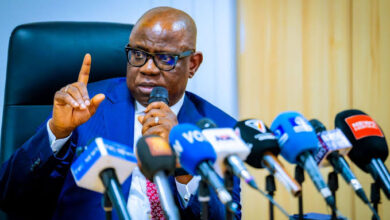
The country’s Minister of Hydrocarbons and Mineral Development, Antonio Oburu Ondo said, “We don’t have a target per se, but what we are focusing on is to make sure that companies start their drilling campaigns.”
Equatorial Guinea pumped just 20,000 barrels of crude a day in September, down from 140,000 barrels a day six years ago, according to data compiled by Bloomberg. That’s contributing to shrinking economy, with the International Monetary Fund projecting a 1.7 percent drop in its GDP this year.
The hydrocarbon law will incentivize both development of existing fields and exploration for new resources with a “wide range of contractual options based on risk appetite,” the minister said in an interview on the sidelines of a Cape Town conference.
The government is also open to bilateral discussions over available blocks and has set up special economic zones to attract investment, he said.
Chevron Corp’s investment in Equatorial Guinea’s gas sector has been a bright spot for the country, along with activity from explorers including Meren Energy Inc and Vaalco Energy Inc. ExxonMobil Holdings Corp., previously a major producer in the country, left in 2024 after almost three decades of operations.
The oil boom in Equatorial Guinea has largely enriched the ruling elite, including President Teodoro Obiang Nguema Mbasogo, who seized power in 1979. After decades of production, it has some of the continent’s worst social indicators and a poor human rights record.
Companies that consider working in Equatorial Guinea look at all information including “fiscal, legal, geological, you name it. Without a positive outcome that comes out of this analysis, I doubt it very much that they would invest,” Ondo said in response to a question about the political situation in the country.
Even with the departure of some countries from OPEC and its own declining output, Equatorial Guinea still finds value in its membership of the alliance. “It’s always a good thing to be part of a group, right? Especially a group with such an influence,” Ondo said.