
Huawei Technologies Nigeria Limited has committed to a stronger collaboration with the National Commission for Colleges of Education (NCCE) to strengthen digital education in Nigeria.
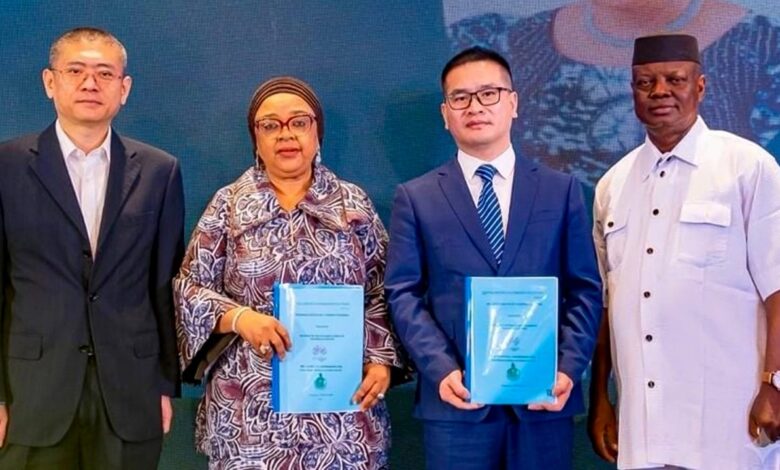
The parties committed to a stronger pact through a Memorandum of Understanding (MoU) at the third Huawei Education Summit 2026 in Abuja, aimed at advancing artificial intelligence initiatives and accelerating digital education across Nigeria.
The agreement was formalised at the third Huawei Education Summit 2026 in Abuja. The one-day event brought together education regulators, university administrators, state government officials and technology experts to discuss practical steps for preparing Nigerian graduates and institutions for an increasingly digital and AI-driven global economy.
Deputy managing director of Huawei Technologies Nigeria, Jim Zhang reaffirmed the company’s commitment to building digital talent and supporting government and educational institutions with technologies that help close the country’s ICT skills gap.
Zhang noted that emerging technologies such as artificial intelligence, cloud computing, cybersecurity and smart learning have reshaped industries, making it essential for educational institutions to adapt.
“Universities and colleges must equip students with practical digital skills and innovative mindsets so they can compete globally,” Zhang said.
He added that Huawei would continue to strengthen partnerships with government, academia and industry to build sustainable ICT ecosystems while promoting inclusive and innovative education.
Executive secretary of the National Universities Commission (NUC), Prof. Abdullahi Yusuf Ribadu, represented by Prof. Abdullahi Zakari, described Huawei’s education model as one worthy of emulation.
He said the company’s sustained investment in human capital has added significant value to Nigeria’s higher education system through its ICT Academy, which moves students from classroom theory to practical learning in networking, cloud computing and other emerging technologies.
Ribadu highlighted the Core Curriculum and Minimum Academic Standards (CCMAS) framework, under which the NUC provides 70 per cent of core academic content to maintain national standards while allowing universities 30 per cent institutional flexibility.
He urged vice-chancellors and academic administrators to use this flexibility to introduce cutting-edge 21st-century skills, entrepreneurship and applied technological competencies that respond to both local and global industry needs.
Executive secretary of the NCCE, Dr Angela Ajala, noted that Huawei has remained a dependable partner since the organisations first signed an MoU several years ago.
She said thousands of lecturers and students have already obtained internationally recognised ICT certifications through the Huawei ICT Academy Programme, contributing to improved employability and innovation across colleges of education.
Ajala announced that the renewed partnership would expand beyond capacity building to include the establishment of a digital academy at the commission.
The academy will provide continuous training for lecturers, students and education stakeholders.
She emphasised that artificial intelligence is “the technology of today” and must be deployed responsibly to improve learning outcomes rather than replace teachers.