Hyundai Patners Bill Gates In US Fusion Startup’s Power Plant Construction

potential collaboration beyond a purely financial investment, extending into fusion power plant construction and infrastructure development. CFS announced early last week that Hyundai participated as an investor in the $1 billion (approximately 1.3 trillion won) funding round first announced in July. Though none of the parties disclosed the specific investment amount, marks the first step in the partnership between the two companies, with plans to explore collaboration opportunities across various areas, including the ARC commercial fusion power plant currently under development by CFS.
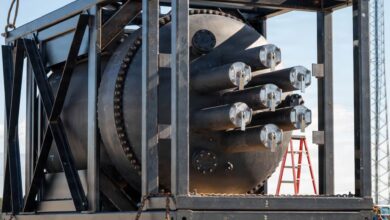
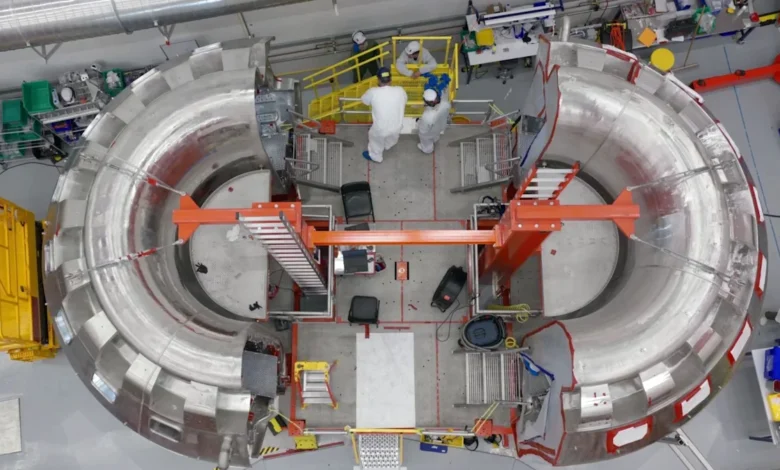
CFS is a fusion energy company created from the Massachusetts Institute of Technology (MIT) in 2018, developing compact fusion systems using high-temperature superconducting magnets. The company is currently assembling its SPARC fusion demonstration device in Devens, Massachusetts. The plan is to first demonstrate net energy production— generating more fusion energy than the energy input—using SPARC, and then leverage that foundation to build the ARC commercial power plant. The first ARC plant is slated for the Polaris fusion power plant site in Chesterfield County, Virginia.
CFS became the first fusion company to submit a grid interconnection application to PJM Interconnection, the largest wholesale electricity market in the United States, and has formed a strategic partnership with Dominion Energy, a US electric utility, with the goal of delivering fusion power to the grid in the early 2030s. The investment is drawing particular attention because Hyundai Motor Group’s industrial capabilities align with CFS’s commercialisation timeline. The group’s engineering and infrastructure construction experience—spanning not only automotive but also construction, steel, and other industrial affiliates—can be directly applied to the fusion power plant construction process.
CFS also noted that South Korea’s inclusion of fusion as one of the key areas in its seven major SEED programmes for fostering new technologies served as a backdrop for the collaboration. Chief executive officer of the startup, Bob Mumgaard said, “As we prepare to deliver fusion energy to the grid in the early 2030s, partnerships with leading industrial companies like Hyundai Motor Group will play an important role in scaling the ARC power plant business. “We look forward to exploring a wide range of collaboration opportunities based on Hyundai Motor Group’s expertise and experience in building power plants in Korea and around the world.”
Also, vice president and head of Hyundai Motor Group’s Future Strategy Division, Chung Hokeun said, “Fusion energy has the potential to play a critical role in supporting a sustainable future while addressing growing global energy demand. As CFS continues to demonstrate technological progress toward commercial fusion energy, we will seek diverse opportunities to contribute Hyundai Motor Group’s industrial, engineering, and infrastructure capabilities to the development of the fusion industry.”
The $1 billion gained from a fundraising in July is considered the largest single investment round among fusion companies worldwide since its own $1.8 billion Series B in 2021. Cumulative funding since founding has reached $4 billion (approximately 5.4 trillion won), which according to the company represents roughly 30 percent of all capital raised by the global fusion industry. Existing investors include Google and Microsoft cofounder Bill Gates. Power purchase agreements are already secured. Google and Italian energy company Eni have signed power purchase agreements (PPAs) to buy more than half of the electricity produced by the first fusion power plant.
CFS’s trajectory is becoming a critical test case in the global fusion industry’s commercialisation race. Nuclear fusion replicates on Earth the process by which the sun generates energy, producing large amounts of electricity without greenhouse gas emissions— earning it the moniker of the ultimate clean energy source.