Island Solar Plant Gets 150-kW Electrolyser To Make Hydrogen From Surplus Energy

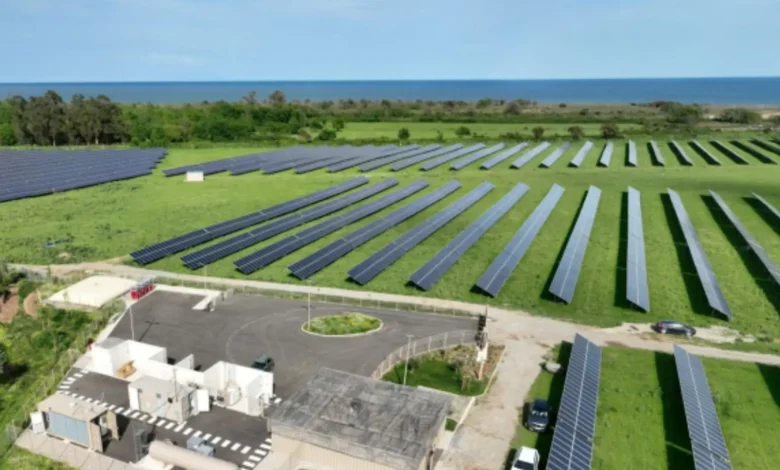
A solar plant on the French island of Corsica has devised a means of converting its surplus electricity into hydrogen. Renewable energy producer, Corsica Sole inaugurated the 150 kilowatt electrolyser facility at its 12-MW Folelli solar plant on September 17.
Called Folell’Hy, the pilot produces, stores, and distributes hydrogen made using surplus solar power. It is designed for an island electricity system where generation must be balanced with demand and some solar output is curtailed when the grid cannot absorb it.
The Folelli plant began operating in 2017 and generates around 18 GWh of electricity a year. Its new hydrogen facility gives Corsica Sole a way to use some of the power that would otherwise be left out of the grid.
Solar electricity feeds 60 electrolysers, which split water to produce hydrogen. The facility has a production capacity of 30 normal cubic meters per hour, or approximately 44 pounds (20 kg) of hydrogen a day. Once produced, the hydrogen is compressed for storage and transport. Folell’Hy can store up to 507 pounds (230 kg) of hydrogen on site at pressures of 300 and 500 bar.
Enapter supplied the electrolysis technology, while Hensoldt Nexeya France integrated the system. The pilot will allow the company to assess how the equipment performs under operating conditions.
Producing hydrogen is only one part of the test. Corsica Sole and Europe Technologies Group have also developed Clément’Hyne, a mobile system for transporting and distributing hydrogen from Folelli to users elsewhere on the island. One of the first intended uses is Alba, a training vessel operated by the Bastia Maritime High School. The vessel has a hydrogen propulsion system, giving the project a local maritime application through which to test the steps from solar generation to hydrogen use.
The company has also identified heavy transport and off-grid power generation as possible future applications. The project is still a pilot. Its purpose is to gather evidence on whether this approach can be used more widely, rather than establish that curtailed solar power can already supply those other uses at scale.
Testing hydrogen’s role on island grids
Folell’Hy is the first operational component of Alchymiste, a research and development project examining how hydrogen could help island grids accommodate variable renewable energy while maintaining stability. Alchymiste has a budget of nearly $5.6 million (€4.9 million), including more than $1.9 million (€1.7 million) in public funding. Corsica Sole is financing the remainder.
The project is supported by the French government’s France 2030 program after selection in the 11th round of the i-Nov innovation competition.
For Corsica, the key question is what happens when sunshine produces more electricity than the grid can accept. Folell’Hy will test whether converting a portion of that surplus into transportable hydrogen gives the island another practical way to use its solar output.