

A new fuel-cell design could help data centers generate more of their own electricity while easing growing pressure on the power grid.
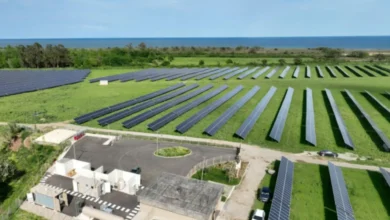
The rapid expansion of data centers across the United States is putting growing pressure on the nation’s electricity supply.
These facilities require enormous amounts of power not only to operate their computing equipment, but also to keep it cool.
The Electric Power Research Institute estimates that data centers could account for as much as 9% of annual U.S. electricity generation by 2030, compared with 4% of total electricity demand in 2023.
According to a report obtained from ScienceDaily, researchers are now exploring ways to reduce some of that strain.
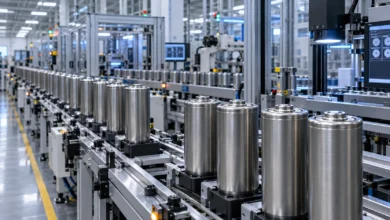
A team led by Gang Wu, the Elvera and William R. Stuckenberg Professor in the McKelvey School of Engineering at Washington University in St. Louis, has developed an approach that could improve low-temperature fuel cells and potentially expand their use as an alternative source of electricity.
The research team, according to the report, also included scientists from Brookhaven National Laboratory, Lawrence Berkeley National Laboratory, Northeastern University and the University of Pittsburgh.
Their findings were published Aug. 6, 2026, in Nature Nanotechnology.
“If a data center is able to supply its electricity itself by using a fuel cell, it would directly convert hydrogen and other fuels into the electricity, reducing the burden on the energy grid,” Wu said.
Fuel cells produce electricity by combining hydrogen and oxygen.
The process also generates water and heat. Catalysts help accelerate this reaction while limiting energy losses and supporting stronger performance and longer operating life.
Designing the right catalyst remains a major challenge. Existing fuel cell catalysts still struggle to provide the combination of activity and durability needed to meet important performance goals.
Platinum is considered one of the most effective catalyst materials, but it is also a precious metal. Researchers therefore want to use as little platinum as possible without reducing the catalyst’s effectiveness during energy conversion and storage.
One way to stretch a small amount of platinum further is to turn it into nanoparticles. Breaking bulk platinum into extremely small particles dramatically increases the amount of surface exposed for chemical reactions. This makes it possible to use very small quantities of the metal, typically less than one quarter of a milligram per square centimeter.
The problem is that platinum nanoparticles can change during fuel cell operation. They may dissolve, move to different locations, and grow larger, causing performance to gradually decline.
More recently, platinum intermetallic catalysts have emerged as a promising alternative to conventional platinum alloys because they can offer improved activity and stability.
Producing them, however, involves another difficult compromise. To keep the nanoparticles small, evenly distributed and efficient in their use of platinum, researchers generally anneal the materials at temperatures below 700°C.
Those temperatures are often too low to fully trigger the transition from a disordered atomic arrangement to a highly ordered one, which is important for maximizing both the activity and durability of intermetallic catalysts.
Wu and his colleagues developed a new carbon structure designed to overcome this limitation. The material consists of porous, hollow carbon spheres containing orderly radial nanochannels, along with substantial pore space and surface area.
This structure allows large numbers of platinum cobalt intermetallic nanoparticles to remain densely packed yet evenly distributed. It also makes it possible to form the desired ordered intermetallic structure at much higher temperatures without causing the nanoparticles to clump together.
In this way, the researchers were able to address a difficult tradeoff between achieving a highly ordered atomic structure and maintaining an even distribution of very small catalyst particles.
“Our strategy is using this new carbon nanostructure to synthesize platinum cobalt intermetallic nanoparticles that can reduce precious metal content and enhance activity and stability,” Wu said.