

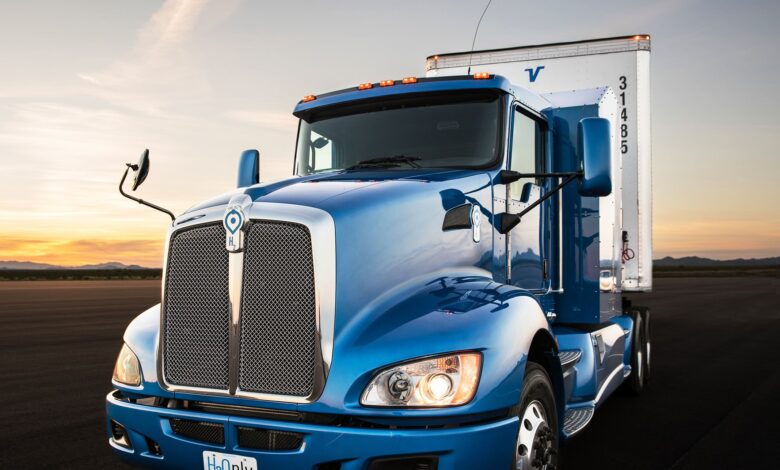
The jump in diesel prices triggered by the Iran war, and shifts toward zero emissions goals have pushed automobile companies to search for alternatives to fossil fuels to power their engines. Researchers have found hydrogen technology a workable alternative, as it could provide a low-cost alternative to traditional electric-powered trucks.
Already, manufacturing giants like Volvo, Man, Mercedes-Benz, BMW, Toyota, Hyundai, and Honda have announced plans to develop semitrucks fueled by hydrogen. “Hydrogen-powered engines come in two general forms. The first is the fuel cell, which uses hydrogen to generate electricity.
“Lighter than their lithium-ion counterparts, whose heavy batteries are impractical for long-distance logistical journeys, hydrogen fuel cells offer longer ranges and shorter recharge times for companies looking to meet zero emissions standards”, a report published by bgr. com/215 indicated.
It added however, that hydrogen fuel cells require manufacturers to create wholesale manufacturing processes, creating a major investment barrier to market entry. Hydrogen combustion engines offer a cheaper, less intensive transition because they share several parts with traditional diesel combustion engines.
However, because they replace diesel with hydrogen, these engines mostly produce water vapor rather than pollutive exhaust. Companies are investing in both technologies.
Despite the environmental gains, the report observed that several hurdles stand in the way of making hydrogen-powered trucks widespread. One major hurdle is availability. As it stands, green hydrogen isn’t nearly as ubiquitous as alternative fuel sources.
The lack of public fueling infrastructure is another major roadblock, particularly for a trucking industry that needs widespread refueling options for long trips. However, some companies are set on overcoming these issues, rolling out pilot programs of the revolutionary technology in hopes of reaching zero emissions.
According to a report obtained from from Reuters, electric heavy truck sales grew over the last two years from a niche market to nearly a third of new heavy truck purchases in 2025 due to government subsidies, cheap refuelling and expanding charging infrastructure.
It added that last year’s growth was particularly weighted in the fourth quarter because buyers also thought the trade-in subsidy programme would be ending soon. According to the report, new-energy heavy truck sales, which are mostly electric, began this year with the same kind of pop, growing 45% year-on-year to 44,000 units and accounting for more than a quarter of the segment, up from less than 20% of sales a year earlier, according to data provider CVWorld.cn.
CVWorld.cn said it also expects April sales of heavy electric trucks to grow 30%, driven by stronger seasonal demand and the higher oil prices. “The war has driven up domestic fuel prices in China, which will inevitably accelerate the replacement of traditional trucks,” said Min Ji, senior analyst at S&P Global Mobility, which plans to revise up its forecast for electric truck sales later this month.
Electric heavy truck sales in China continued to grow in 2026, accounting for 27% of total new heavy truck sales in the first quarter. With ranges of around 300 km (186 miles), electric heavy trucks are mostly used for short-haul trips between industrial sites and transport hubs, although long-distance corridors are expanding and producers such as Sany are marketing trucks with ranges of up to 600 km.
Widespread electrification of passenger cars and the rapid roll-out of electric and liquefied natural gas powered trucks have also reversed decades of growth in the use of diesel and gasoline in China, where most analysts expect oil demand to peak by 2030.
Accordingly, some energy consultancies now expect the decline in diesel use to accelerate faster than previously forecast. GL Consulting expects diesel consumption to fall 4.3% this year versus a pre-war forecast for a 4.1% drop. Rystad Energy expects diesel demand to fall 5% this year, faster than a 4% decline it forecast before the war, equivalent to a further decrease of about 40,000 barrels per day.
The chart shows purchase prices and lifecycle costs over 1 million km for electric, LNG, and diesel trucks. Electric trucks have the highest initial costs but the lowest total lifecycle costs due to the cheap fuel cost.