
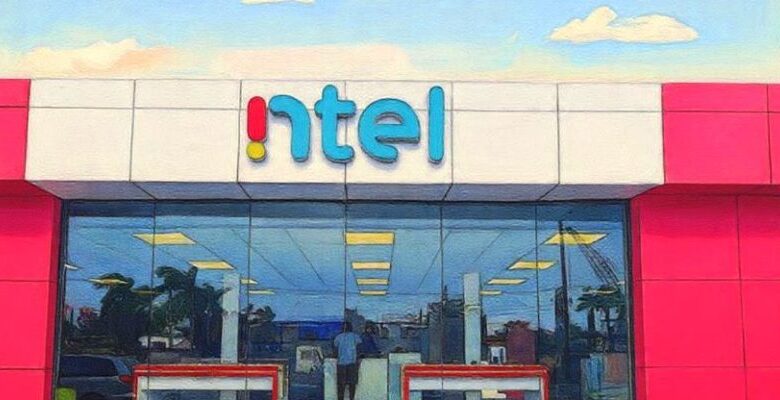
NatCom Development and Investment Limited, operators of the ntel telecom, has launched a comeback with a new strategy shifting from the traditional mobile subscriber race and repositions the company as a digital infrastructure business.
The came back to the Nigerian market with the relaunch of brand tagged ‘The Next Frontier,’ marking the most significant strategic shift in ntel’s history since it acquired the assets of the former state-owned Nigerian Telecommunications Limited (NITEL), which once dominated the country’s communications landscape before the sector was liberalised.
Managing director and chief executive officer of ntel, Soji Maurice-Diya said the company’s long silence had left many Nigerians believing it no longer existed. He said the relaunch is meant to show that ntel is not fading away but entering an entirely new era built on innovation, partnerships, and long-term investment. “A lot of us don’t realise this.
Coming from a storied past as Postal and Telecommunications, ntel is really over 120 years old. “Our hope is that there’s another 120 years left in the history of this business as we reimagine, in various formats, what the future looks like,” Maurice-Diya said.
The decision to stop competing for mass-market mobile subscribers is not a retreat, according to him, but a deliberate strategic choice based on where the real opportunities in Nigeria’s telecoms market now lie. Nigeria recorded 188.01 million active mobile subscriptions as of April 2026, according to the Nigerian Communications Commission.
Broadband penetration reached 55.67 percent while active internet subscriptions hit 154.35 million during the same period. These numbers reflect a market that is maturing fast, with established giants like MTN, Airtel, Glo, and 9mobile already deeply entrenched in the consumer mobile space.
Rather than competing for a share of that crowded market, ntel is betting on what sits underneath it, being the infrastructure, connectivity, and real estate assets that every operator needs to function.
Maurice-Diya said the company sees clear opportunities to build a strong real estate business, a telecoms infrastructure provider, and ultimately a meaningful digital player. That combination is what “The Next Frontier” is designed to deliver.
Under the new structure, ntel has reorganised its operations into three distinct business units, each targeting a different part of Nigeria’s digital economy. The first is Beam, which will focus on broadband and internet connectivity services.
As Nigeria pushes toward deeper broadband penetration and more homes and businesses seek faster internet access, Beam positions ntel to serve that demand directly. The second is Titan, which will handle telecommunications infrastructure.
This includes towers and wholesale fibre assets, the kind of physical backbone that other operators and enterprises need to deliver their own services. Rather than competing with MTN or Airtel for subscribers, Titan would potentially serve them as an infrastructure partner.
The third is Eden, which will manage ntel’s property and commercial real estate portfolio. This is perhaps the most unexpected part of the strategy, turning legacy physical assets inherited from NITEL into a commercial business in its own right.