
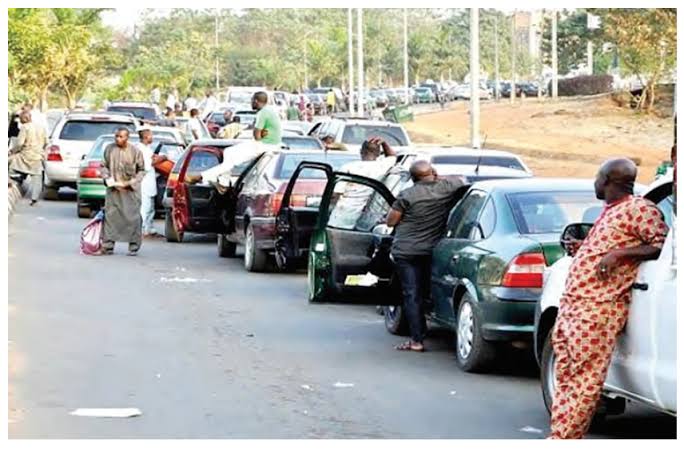
Compressed Natural Gas (CNG) has cut fuelling costs significantly, but long queues, inconsistent dispensing pressure and too few stations are eroding the benefits. In March 2026, President Bola Tinubu directed the accelerated deployment of Mobile Refuelling Units to improve access pending the expansion of permanent infrastructure. For many drivers, CNG is the only relief from the high cost of petrol. The gas itself is not expensive. The problem is the time lost waiting to refill. Motorists sometimes spend several hours in queues. That is a loss of valuable man-hours, and it is why many commercial drivers have not reduced fares. Some say they are still recovering their conversion investment, while losing working hours at filling stations.
For those already converted, returning to petrol would mean going back to the high costs they sought to avoid. It is against this background that the State House has partnered with the Presidential Initiative on Compressed Natural Gas and Electric Vehicles (PiCNG & EV) and Rolling Energy Ltd. to promote CNG adoption and reduce transportation costs. The Permanent Secretary, State House, Mr Temitope Fashedemi, said this on Friday at the inauguration of a CNG Integrated Refuelling Unit (IRU) Station in Abuja. The station is an integrated unit, with its compressor and dispenser systems incorporated into a single unit.
The facility, expected to ease pressure on existing stations, also houses a conversion centre equipped with two service pits, with capacity to convert about 12 vehicles daily. Fashedemi described it as a practical demonstration of President Tinubu’s commitment to promoting CNG as a cheaper alternative fuel, leveraging Nigeria’s abundant natural gas resources. The partners reactivated an abandoned fuel facility and converted it into a CNG refuelling station. “The provision of CNG infrastructure should be driven largely by private sector investment rather than government ownership and direct business operations,” he said.
The State House provided the facility without spending public funds, while Rolling Energy undertook its renovation and installation of the necessary infrastructure. The State House has also acquired about 10 hybrid vehicles, alongside hybrid shuttle buses operating within the Villa. Some staff will also have their vehicles converted to CNG-hybrid systems in the coming weeks. If CNG is to deliver on its promise, access must be as cheap as the gas itself. More stations, more mobile units, and more private investment are the only way to end the queues and protect the savings.