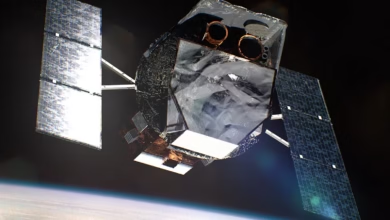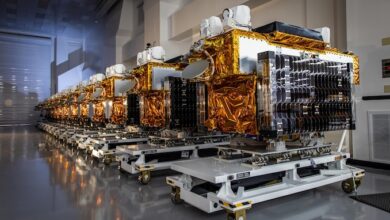

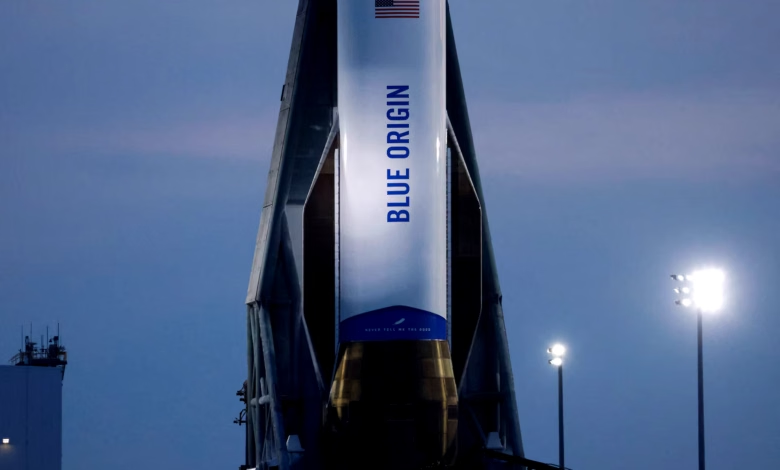
Google last year disclosed it was working on scalable orbiting data centres, a project it described as one of its research “moonshots.” The company in a release said the mission on New Glenn is designed to deploy satellites, each with computing capacity at roughly the scale of a data centre rack, into Sun-synchronous orbit where they can receive nearly continuous solar energy. “Project Suncatcher is a longterm moonshot to scale AI infrastructure in space by tapping into the abundant solar power in orbit. “This dedicated launch with Blue Origin represents a crucial milestone on our roadmap as we expand the boundaries of what’s possible for the future of compute,” senior director of Project Suncatcher at Google, Travis Beals said in the release.
The announcement comes as US commercial heavy lift rockets, including New Glenn, are filling up their capacity through the year 2030. The Google mission will fly on the 7×2 variant of the New Glenn rocket, the smaller version of the vehicle that has launched three times to date. The purpose of the 2029 launch will likely be to test the ability to network solar-powered satellites equipped with AI chips and demonstrate machine-learning compute in space. In that sense, it will be a technology demonstration. Google did not say who it was contracting with to build the satellites, which may weigh something on the order of several tons.
Perhaps the bigger question for Google is not whether it can make this technology work—but whether it is tenable for a company to have ambitions for a large constellation of orbital data centers in the 2030s without its own launch vehicle. Need for super cheap launch There remain a lot of questions about the economic viability of orbital data centers, but almost everyone agrees on one universal truth: Without ultra low-cost, heavy lift capability, there is no way that data centers in space can be economically competitive with terrestrial data centres. Upon announcing Project Suncatcher a year ago, Google said it was planning for the mid-2030s, when launch costs are projected to drop to as little as $200 per kg. The only rocket likely capable of reaching those costs during the next decade is SpaceX’s Starship vehicle, but in recent months it has become clear that SpaceX will prioritize its own payloads (including Starmind data centers) on Starship.
For Google to reach its target price of $200 per kg, it would likely require a fully optimised Starship V4 (the company is currently flying a V3 Starship) that reaches a lift capacity of approximately 200 metric tons to orbit. SpaceX has powerful incentives to prioritize its own orbital computing infrastructure, potentially leaving Google dependent on whatever Starship capacity and pricing SpaceX is willing to offer outside customers. So how does Google plan to reach orbit in the 2030s? Perhaps this explains the new partnership with Blue Origin, which presently covers a single launch but could grow to more.