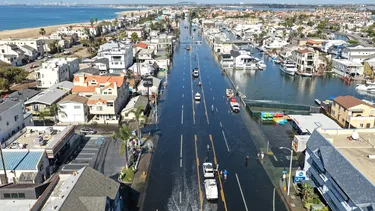

In Antalya, the world has gathered for COP31. The halls are full of big promises, new technologies, and billions in pledges. Solar panels, carbon capture, AI for weather forecasting, and smart grids dominate the exhibitions. Yet one question hangs over the conference: who controls the technology? For too long, climate action has been designed from the top. Governments sign agreements. Corporations unveil innovations. Agencies launch funds. Communities, the people living with floods and droughts, are invited at the end to participate in decisions already made. That model has failed. It is against this backdrop that Connected Advocacy and its partners have launched the World Locally Led Foundation. It connects frontline communities, local organisations, traditional leaders, and international partners to promote locally led solutions.
The logic is simple. Climate tech only works when it is deployed where it is needed, maintained by those who use it, and governed by those who live with its consequences. According to its Global Director, Prince Israel Orekha, climate action must go beyond recognising communities in policy documents to giving them authority over decisions and resources. Communities must set priorities, shape solutions, and oversee implementation. This is not sentiment. It is systems design. A solar mini-grid fails if the community cannot repair it. An early warning app fails if it ignores indigenous knowledge. A carbon project fails if it takes land from the people it claims to protect. At COP31, the Just Transition debate has exposed this contradiction.
Can a transition be called just if communities lose control of their resources while corporations gain new opportunities? A just transition must go beyond changing energy sources. It must transform the structures responsible for exploitation and marginalisation. That requires three shifts. First, power. Communities, workers, women, and young people must shape decisions affecting their lives. Not consultation. Control. Second, money. Climate finance must reach the frontline. Funding must be simpler, financing fairer, and illicit flows that drain countries must be stopped. Local organisations need resources to respond before, during, and after emergencies.
Third, knowledge. Indigenous knowledge is not a relic. It is data, accumulated over generations, about land and water. Interventions work better when that knowledge is respected. Frontline communities are not passive recipients. They are active responders. If COP31 wants its technology to scale, it must put that technology in their hands. The world does not lack climate tech. It lacks climate justice. Without justice, even the best technology will fail.