

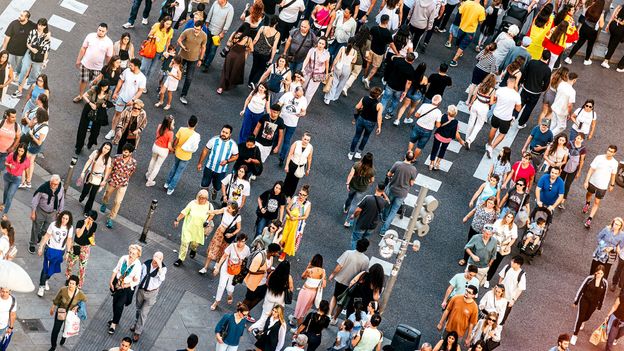
The cherry blossoms are still blooming beneath Mount Fuji, and the tourists are still coming – but this year, the festival is gone. In Fujiyoshida, Japan, officials have cancelled the city’s annual sakura celebration – an event that typically draws 200,000 visitors – after residents complained of littering, trespassing and even tourists wandering into private homes. It’s the latest sign that as global tourism surges toward record highs, patience in the world’s most popular destinations is running low. In 2025, Japan welcomed nearly 43 million visitors, its highest number ever. Meanwhile, Europe hosted more than half of the world’s 1.5 billion international arrivals. With global travel projected to hit 1.8 billion arrivals by 2030, governments are scrambling to manage the pressure.
And some are reaching for measures that would have seemed extreme just a few years ago: deploying AI crowd control, erecting physical barriers and charging triple entry fees for foreigners, as well as cancelling iconic festivals. While many of these countries still welcome visitors, they just want them spread out, better behaved or visiting at different times of year. We spoke to tourism boards and industry leaders in countries trialling some of the most assertive approaches. Japan: Blocking and restricting The cherry blossom festival cancellation is just the latest in Japan’s escalating efforts to manage overtourism. In 2024, the town of Fujikawaguchiko erected a physical barrier blocking a popular Mount Fuji photo spot after visitors were climbing roofs, ignoring security guards and ignoring safety rules. Kyoto, which has long struggled with overcrowding, has banned photography of geisha and restricted access to certain alleyways in historic Gion, one of the city’s most popular sightseeing districts.
It has also lately turned to technology, launching digital crowd-management tools to try to work together with tourists more sustainably. Its new Congestion Forecast tool predicts the best days and times to visit major sites; while a Smart Navi app provides real-time updates on crowd levels. Its Hidden Gems initiative promotes six quieter districts beyond the famous temples; and Hands Free Kyoto offers visitors luggage transport and storage services to reduce crowding on public transportation. “While there is no silver bullet for overtourism, we intend to continue implementing measures to protect citizens’ daily lives while also ensuring visitors can enjoy a comfortable stay,” said Kousaku Ono, manager of Kyoto’s Sustainable Tourism Promotion Division.
Tour operators are adjusting too. B-Corp operator Inside Travel Group has deliberately shifted its Japan focus towards five undervisited regions, including Toyama, Nagoya, Nagasaki, Aomori and Yamaguchi. “Overtourism is one of the biggest threats facing the future of travel, and it’s something the industry needs to confront head-on,” said Tim Oakes, the company’s managing director. “These are places that actively want visitors, just not overcrowding.” United States: Charging international visitors The US has taken a more overtly financial approach. Its vast US National Parks system, comprising 433 parks across 85 million acres, is a major draw for visitors, but half of all recreation visits to national parks are concentrated in the 25 most-visited parks, which has led to overcrowding, long lines and an excess of litter.
In 2026, the US introduced a $100 (£73.67) per person surcharge for international visitors at 11 popular parks, including Yellowstone, Yosemite and the Grand Canyon. The annual America the Beautiful pass, which covers all federal recreation sites, now costs $250 (£184) for non-residents, compared with $80 (£59) for US citizens. The policy followed an executive order directing the Department of the Interior to increase fees for non-US residents, which some report is leading to even longer entrance lines as park staffers verify citizenship and check IDs. Some who work in and around the parks don’t believe the strategy is robust enough to address overcrowding.
“The increased fees alone are unlikely to meaningfully reduce overtourism during peak season,” said Kevin Jackson, cofounder of EXP Journeys, which runs private travel experiences near Yellowstone, Grand Canyon, Zion, Moab and Yosemite. “Demand for iconic parks remains strong, and for the type of trips we design, the additional fee represents a relatively small percentage of total trip cost.” However, he noted that some international travellers may opt for lesser-known parks where the surcharge does not apply, such as Canyonlands in Utah. Dulani Porter, executive vice president at destination marketing firm SPARK, sees deeper structural issues. “Pricing is not a visitor management plan,” she said, pointing out that congestion at places like Zion and Yosemite is largely shaped by domestic summer travel patterns, school calendars and limited road and parking capacity.
She also raised the impact on gateway communities. International visitors contribute disproportionately to local tourism economies, and even modest deterrence can ripple through hotels, restaurants and tour operators. “Overtourism is fundamentally a systems issue,” she said. “Not simply a pricing issue.” Jamaica: Redirecting seasonality In contrast, Jamaica is using incentives rather than restrictions. Eager to draw tourists back after the destruction caused by Hurricane Melissa in 2025, the Caribbean island is taking a creative route to ensure they come in off-peak times. Starting in March, Jamaica Tourism, JetBlue and WeatherPromise have partnered to offer rain coverage on every Jamaica package booked through the end of November, including hurricane season.
If the weather meets the qualifying threshold of “excessive rain”, travellers who opt in will receive an automatic refund while still getting to go on the trip, possibly enjoying some of the country’s indoor attractions like the Bob Marley Museum in Kingston or rum tasting in Nassau Valley. “This partnership helps give our customers the confidence to book Jamaica year-round, which in turn supports a more balanced flow of visitors across seasons,” said Jamie Perry, president of Paisly, the company behind JetBlue Vacations. “By reducing the perceived risk of travelling during traditionally quieter periods, we’re helping create a better experience for both customers and local communities.”
Culled from https://www.bbc.com/