
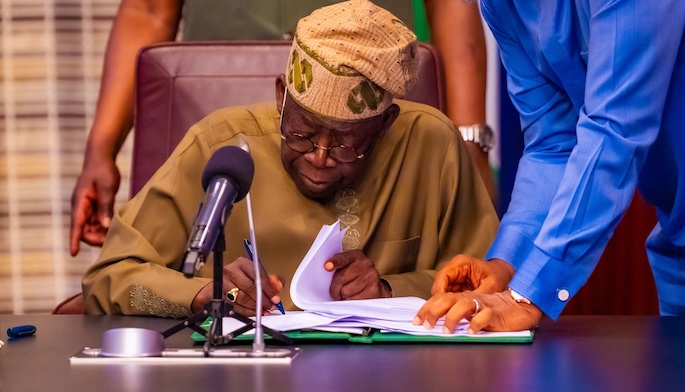
In March, the Federal Ministry of Livestock Development unveiled a $50 billion investment initiative by the Nigerian Association of Chambers of Commerce, Industry, Mines and Agriculture (NACCIMA) to drive sector growth, as part of its commitment to transforming Nigeria’s livestock sector into a $74 billion economic powerhouse. The announcement was made at the National Stakeholders Roundtable on Transforming the Livestock Sector in Abuja. There, the Minister of Livestock Development, Idi Mukhtar Maiha, said the initiative aligns with the Federal Government’s National Livestock Growth Acceleration Strategy (NL-GAS).
He described it as a private sector-driven approach to repositioning the industry for long-term competitiveness. Sustainable growth, he added, would depend largely on private investment, innovation, and strong collaboration with government. The livestock sector currently contributes about $32 billion to Nigeria’s economy and supports millions of livelihoods, yet officials say its potential remains largely untapped.
Through targeted interventions in feed development, pasture expansion, animal health systems, and genetic improvement, the Ministry aims to significantly boost productivity and output across the value chain. Red meat, dairy, and leather have been identified as priority value chains with strong potential for import substitution, export expansion, and job creation. Investors are being urged to explore opportunities in ranching, processing, cold chain logistics, and veterinary services. “We are committed to de-risking investments by strengthening regulations, harmonising data systems, and creating an enabling environment that guarantees strong returns,” Maiha stressed.
The $50 billion drive is structured as a 10-year strategic plan focused on modern ranching systems, improved infrastructure, and digital innovation. While government will provide policy and regulatory backing, the private sector is expected to lead capital deployment and operations. The Federal Government says it is revitalizing the livestock sector through innovation and technology to make agriculture more attractive to young Nigerians. To advance that goal, the Arewa Agric and Innovation Summit 2026 was held in Kano on Saturday.
The summit provided a platform for youths from the North and across Nigeria to develop tech-driven solutions to farming challenges. The creation of the Ministry of Livestock Development by the President Bola Tinubu-led administration, a first in the nation’s 64-year history, marks a pivotal move toward sector-wide transformation. “The agriculture sector is now calling on the youth. We are rebranding it. This is not about the traditional, labour-intensive image of a weathered, impoverished farmer. Today, we are unlocking the entire value chain—from lab to land, from grass to glass,” Maiha stated.
The government is pushing modern techniques such as feedlot systems, ranching, and cow-calf operations, alongside technology-driven livestock management. Digital tools, including herd-management systems and drones with high-definition sensors, will be deployed to track animal growth, pasture conditions, soil temperature, and water stress. Nigeria’s livestock sector also stands to benefit from rising demand for animal-based proteins.
Government is upgrading value chains through better abattoir operations, dairy processing, tannery development, and footwear production. The Kano event attracted young innovators. The minister urged them to lead: “This country belongs to the youth. Wake up, get up, move up, rise up, learn to settle, and take the driver’s seat.” Co-Chairman of the Presidential Livestock Reforms Implementation Committee, Prof. Attahiru Jega, also called for innovation-driven agriculture and entrepreneurship.
He noted that previous Youth Opportunity Summits in seven states showed strong interest, with 200 emerging “agricpreneurs” completing a five-day pre-summit capacity programme. With this renewed focus, the sector offers opportunities beyond traditional farming in logistics, processing, and entrepreneurship, positioning Northern Nigeria and the country as a leading agricultural innovation hub.