

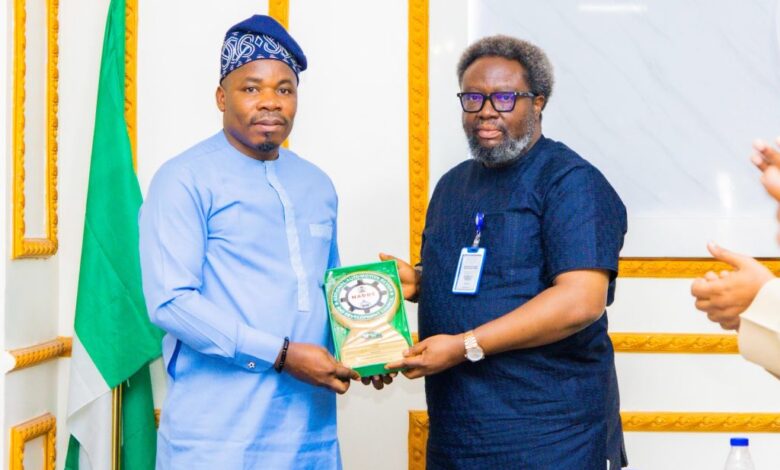
In a strategic move to develop the Raw Materials Research and Development Council (RMRDC) is collaborating with the Nigerian automotive sector, the National Automotive Design and Development Council (NADDC) to advance local content development within the Nigerian automotive industry.
This was made known during a strategic engagement between the management of the two councils in Abuja last week. Speaking at the meeting, director-general of NADDC, Otunba Oluwemimo Joseph Osanipin, stated that the collaboration would focus on identifying highly imported automotive components and replacing them with locally sourced alternatives through joint research, development, and industrial partnerships.
Osanipin admitted that both agencies should have established the collaboration much earlier considering their complementary mandates. He explained that NADDC had encountered several challenges while pursuing local automotive component development, particularly in translating concepts into industrial-scale production.
Osanipin revealed that Nigeria spends billions of dollars annually importing replacement parts for motorcycles, tricycles, and vehicles, a situation he described as unsustainable. He disclosed that NADDC had already initiated a local components development programme aimed at identifying and producing locally manufacturable parts, beginning with motorcycles and tricycles.
According to him, the partnership with RMRDC would provide the technical support and raw material expertise required to accelerate the programme. He warned that failure to strengthen local manufacturing capacity could expose Nigeria to increase import dependence and weaken local industries, adding that the country has limited time to strategically position itself within the continental market.
In his remarks, the DG of RMRDC, Prof. Nnayelugo Ikemounso, reaffirmed the Council’s commitment to supporting NADDC in harnessing locally available resources for automotive production, further reinforcing a shared vision of sustainable industrial advancement.
The engagement focused on strengthening collaboration between both agencies, with key discussions centered on mobilising local technicians, integrating the informal sector into the automotive value chain, and leveraging national logistics frameworks to boost local content development.