

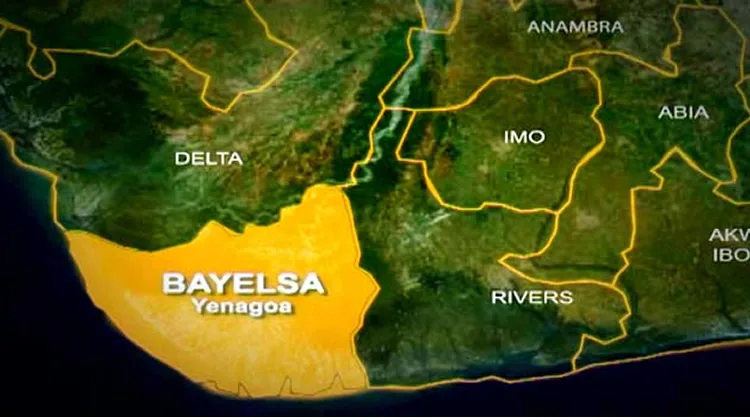
Director of Health of Mother Earth Foundation, HOMEF, Dr Nnimmo Bassey has said Bayelsa currently stands as the most polluted state in Nigeria, considering the hydrocarbon extraction involving oil and gas business.
The renowned environmentalist stated this on Thursday during a one-day capacity-sharing programme with the people of Nembe in Nembe Local Government Area of the state. According to him, Bayelsa is one of the most polluted states in Nigeria and possibly in the world.
He said the Bayelsa State Oil and Environment Commission Report, published in May 2023, recorded a per capita oil pollution level of 1.5 barrels of crude oil.
Bassey also cited the environmental assessment of Ogoniland conducted by the United Nations Environment Programme (UNEP) as evidence of the devastating impact of oil pollution in the Niger Delta. He said oil companies had failed to adequately clean up polluted areas, alleging that some companies resorted to superficial measures rather than carrying out proper remediation.
“The environmental assessment of Ogoniland was commissioned by the Federal Government of Nigeria in 2006 and carried out by UNEP to determine the scale, impact and long-term consequences of oil pollution in Ogoniland, Rivers. The assessment, conducted between 2009 and 2011, represents one of the most comprehensive environmental studies ever undertaken in an oil-producing region,” he said.
Bassey said the investigation involved extensive scientific fieldwork across the four Ogoni local government areas of Khana, Gokana, Tai and Eleme, as well as laboratory analysis and consultations with communities.
He urged oil companies to stop what he described as the systematic destruction of the Niger Delta, saying the region had been treated as a “sacrificial zone” since the early 1950s. Bassey lamented the adverse effects of oil and gas extraction, including massive deforestation and various forms of erosion affecting land and coastlines. He noted that although the term “environmental genocide” used in describing the situation was weighty, the issue should not be treated with levity.