Harnessing Technology-Driven Prison Reforms

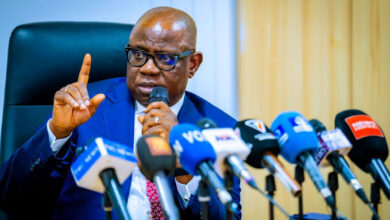
The Federal Government has embraced technology, data-driven decision-making, institutional reforms, and stronger regional collaboration as part of measures to transform correctional services across Africa.
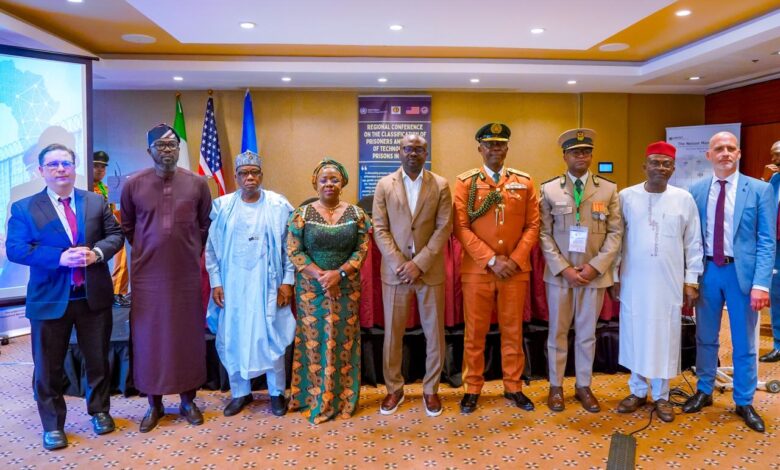
This is a win, not just for Nigeria, but for the African continent at large.The Minister of Interior, Hon. Dr. Olubunmi Tunji-Ojo, made the disclosure this week at the United Nations Office on Drugs and Crime (UNODC) Regional Conference on Prisoner Classification.
Prisons worldwide face challenges such as overcrowding, limited resources, and the need for effective reintegration programmes.
Innovative technologies can enhance rehabilitation programmes within correctional facilities.Digital tools offer innovative solutions by expanding access to education, vocational training, and mental health support, while also strengthening family and community connections.
Technologies such as virtual reality (VR) and digital learning platforms have the potential to transform rehabilitation efforts, but their implementation must be ethical, secure, and aligned with international human rights standards.
The use of technology in prison settings in Africa is part of the modernization of correctional systems, aimed at improving outdated practices to meet the realities of the 21st century.
The Federal Government is working in collaboration with the United Nations Office on Drugs and Crime (UNODC), the African Correctional Services Association (ACSA), the United States Bureau of International Narcotics and Law Enforcement Affairs (INL), and other partners to achieve this goal.
It is a critical platform for advancing common standards across Africa.According to the Minister: “The approach to correctional service management in the 19th century cannot be the same as that of the 21st century.
Technology is no longer optional — it is essential to building secure, efficient and humane correctional systems.”The ministry adopted modern technology to address the myriad issues affecting correctional services.”We spend too much time prescribing solutions to problems we do not fully understand.
If we devote adequate time to understanding the problem, the solution becomes much easier to implement,” he said.To ensure better and more effective prison management, correctional leaders should focus on three fundamental questions in driving reform: identifying the problem, determining the appropriate solution and establishing a clear timeline for implementation.
Since the current administration assumed office in May 2023, the country has recorded no successful prison attacks or jailbreaks. This achievement has been recorded through investments in digital transformation, improved data management and stronger collaboration among security agencies.
Digitizing inmate records, including biometric information and photographs, has significantly improved Nigeria’s ability to respond swiftly to security threats and track offenders.”This is the power of technology,” the minister said. “But technology alone is not enough. It will never replace human beings.
Technology is only a catalyst that improves efficiency. Investment in technology must go hand in hand with investment in human capacity.”African countries need to integrate correctional services into their broader national security plans instead of treating them as separate institutions.
There is also a need for stronger information sharing among law enforcement agencies within countries and across borders to deny criminals safe havens anywhere on the continent.
By leveraging technology, any criminal fleeing one country cannot simply find refuge in another because the systems would be connected and there would be collaboration among institutions.Beyond security, there is a need for a shift in the philosophy of corrections.
Correctional centres should be seen as institutions of rehabilitation rather than mere incarceration.
A correctional centre should be a place of transformation, rehabilitation, restoration, and hope — not simply a place of confinement.African governments should strengthen legal frameworks governing borstal and juvenile justice institutions.
Young offenders should never be housed alongside hardened criminals because young people deserve an opportunity for rehabilitation, not a pathway into deeper criminality.
Nigeria has significantly expanded educational and vocational opportunities for inmates. Thousands are currently enrolled in formal education, postgraduate programmes, vocational training, and skills development initiatives.
These efforts, along with structured rehabilitation programmes, have contributed to a dramatic reduction in recidivism.
This enables correctional facilities to become centres of productivity and personal transformation.”African leaders should be agents of transformation and work together to build correctional systems that strengthen justice, improve security, and restore hope,” the Minister said.
African nations need to embrace technology as an indispensable tool for transforming correctional administration and strengthening internal security.