
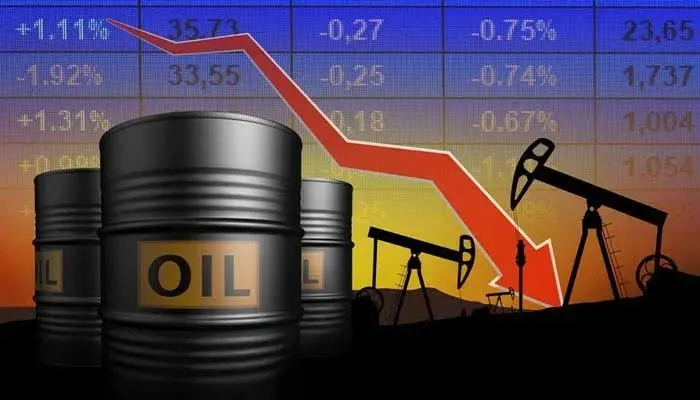
European diesel slumped more than eight percent before paring losses while US diesel futures fell as much as 5.6 percent after French President Emmanuel Macron said the G7 wiuld release up to 100 million barrels of crude stocks and diesel. The energy complex slid in tandem, with West Texas Intermediate falling to settle near $91 a barrel.
Bloomberg reported that the development came as the Trump administration pulls multiple levers to drive down fuel prices. The White House had been pressing the European Union to release stockpiles to help avert a potential ban on diesel exports from the US, which has become the continent’s top supplier.
Treasury Secretary Scott Bessent on Thursday urged European partners to make additional supplies available “immediately.”
Still, analysts and traders say the latest release may not be enough to offset continued loss in supplies.
“I think it takes away the upside story in diesel, but is not an overwhelming amount of diesel for the market to consume,” said Scott Shelton, an energy specialist at TP ICAP Group Plc.
“It just helps in balancing the losses from both Russia and Middle East in the near term,” Shelton said.
Fuel markets have been flashing signs of distress for several weeks, as diesel supplies in particular have shrunk due to the war in the Middle East and Ukrainian attacks on Russian refineries.
Shortages are also bolstering crude demand as refineries try to churn out as many barrels as they can just as consumption rises ahead of the Northern Hemisphere winter.
That helps explain why oil prices have remained elevated above $100 even as Wall Street analysts said earlier this week that crude flows from the region were nearing pre-war levels.
Brent jumped on Thursday as the US deployed an additional aircraft carrier and 10,000 more troops to the Gulf.
Prices have remained far from their peaks during the war, however, as transits through Hormuz continue.
Saudi Arabia raised oil flows through its key cross-country pipeline to more than 80 percent of capacity after repairing damage from attacks last month.
Wall Street analysts said earlier this week that crude flows from the region were nearing pre-war levels.
“Broadly crude flows are recovering, but the real pressure point has shifted into diesel. Releasing stocks can provide a critical pressure-release valve, but it only buys time and doesn’t fix the underlying supply problem,” said Emily Ashford, head of energy research at Standard Chartered.
Oil futures have swung this week as Middle East flows improved but uncertainties loomed as Washington and Tehran failed to make headway toward a lasting peace agreement that would fully reopen Hormuz.
Attention has now shifted to strategic stockpiles, especially as supply buffers have weakened.