
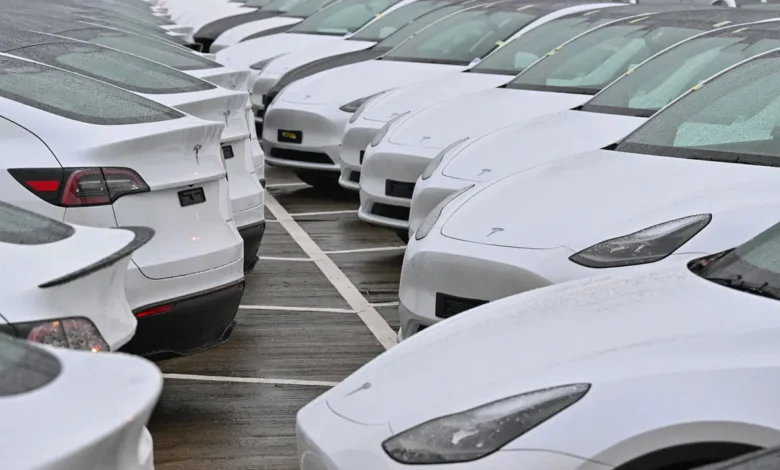
It was the second strong quarter in a row for Tesla after a somewhat rough start to the year.
The sales figure easily beat out consensus estimates from Wall Street and topped even the most optimistic view for the company, which made its 10 millionth vehicle earlier this year.
The company said on Friday morning that it built 464,391 vehicles in the quarter and delivered more than 486,532.
That’s an increase of roughly 6,000 vehicle deliveries compared to the second quarter.
However, sales were still down from the same period last year, when Tesla delivered 497,000 vehicles.
That quarter — Tesla’s best ever — was helped by a rush of US buyers who were looking to take advantage of an expiring federal tax credit.
Before Friday’s numbers were released, Tesla’s sales were down nearly 20 percent year-over-year in the US market, according to Cox Automotive.
That drop has been the result of a number of factors. Tesla has not released any new consumer models in years — with the exception of the Cybertruck, which has been a commercial flop.
Potential buyers have also balked because of Elon Musk’s personal support of Donald Trump’s presidential campaign and his role overseeing the Department of Government Efficiency, which laid off thousands of workers and canceled international aid funding.
Tesla has looked to other markets to make up for lost US sales. The company’s sales are on the rise again in Europe, where EVs are more widely adopted and supported by tighter emissions regulations.
Tesla is reportedly expanding capacity at its factory in Germany to meet that demand.
The company has also seen continued strong sales out of its factory in China despite competition in the region, with some of those sales driven by Tesla looking to newer markets like Japan, Australia, and Lithuania.
Despite the rebound in overall momentum, sales have become something of a taboo subject for Tesla chief executive officer, Elon Musk, who is increasingly focused on the company’s other efforts.
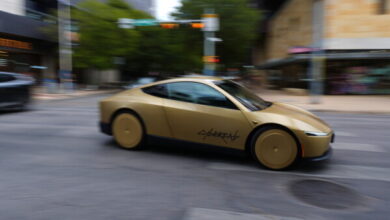
Perhaps the biggest example is the Cybercab, which Tesla started putting on the roads of Austin, Texas in recent weeks. The two-seater EV has been giving autonomous rides to passengers despite having no driver, steering wheel, or pedals.
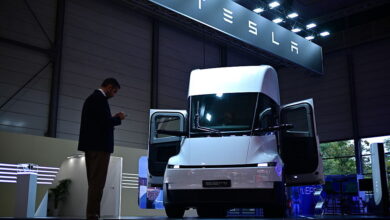
Tesla also recently launched the production version of its electric big rig, nearly a decade after it was first introduced. The company aims to make roughly 50,000 Tesla Semi vehicles per year.
Other new efforts are in the works, but don’t have firm commercial timelines. The second-generation Roadster is set to be re-revealed on October 15 after years of delays, though it’s not clear when it will get built.
Tesla is also developing the Optimus humanoid robot, but has repeatedly pushed back its timeline.
Earlier this week, Tesla announced it had secured up to $30 billion in new lines of credit to support these projects.