Returning Moribund Govt Refineries Will Address Rising Cost Of Petroleum Products, Says Expert


Energy expert, Dr. Joseph Obele has called for resuscitation of moribund public refineries to curb rising cost of refined petroleum products.
Obele, a lecturer at Ignatius Ajuru University of Education, Port Harcourt, advised the federal government and the management of the Nigerian National Petroleum Company Limited (NNPCL) to urgently restart government-owned refineries as a direct response to the rising cost of petroleum products.
He said the immediate and practical approach to addressing the current increase in petroleum prices is to restore production at the government-owned refineries and maximise every available refining capacity in the country. “The immediate approach to the recent rise in petroleum prices is to restart the government-owned refineries,” he said.
According to him, restoring functional government-owned refining capacity will increase domestic supply, reduce dependence on imported refined petroleum products and contribute to greater stability in the downstream petroleum market. He noted that Nigeria should maximise all available refining capacity while continuing to encourage responsible private-sector investment and healthy competition within the downstream petroleum industry.
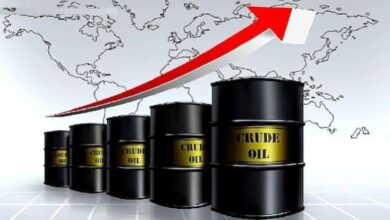
Dr. Obele expressed concern over the continued rise in crude oil prices amid the ongoing tensions involving the United States and Iran and concerns around the Strait of Hormuz, warning that sustained supply risks could continue to put pressure on global petroleum prices. He noted that Brent crude closed at about $105.83 per barrel on 16 September 2026, while WTI closed at about $102.43 per barrel.
According to Dr. Obele, the impact is already being felt in the Nigerian downstream market, with Premium Motor Spirit (PMS) reportedly selling in the range of N1,400–N1,500 per litre in some locations, while Automotive Gas Oil (AGO) is selling above N2,000 per litre.
He warned that a prolonged increase in petroleum prices would have a wider economic impact, particularly on transportation, food, medical services and other essential commodities. “The continuous increase in the cost of petroleum products will invariably affect the prices of virtually all commodities and services. It will create additional inflationary pressure and deepen the financial hardship being experienced by Nigerians,” Obele noted.
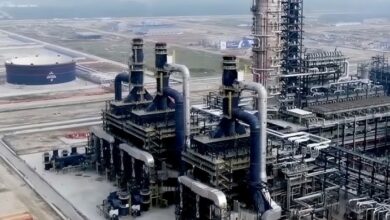
The expert, therefore, urged the federal government and the management of NNPCL to act now by commencing production at the Port Harcourt Refinery and Warri, stressing that restoring domestic refining capacity is critical at a time when the cost of petroleum products is becoming increasingly burdensome for Nigerians.
He said restarting the refinery before the 2027 general elections would be significant not only for Nigeria’s energy security but also for public confidence in the federal government’s commitment to reviving critical national assets.
Obele noted that the prolonged dormancy of government-owned refineries has had serious economic and employment implications across the petroleum value chain, affecting workers, contractors, marketers, transporters, businesses and other dependants of the sector. According to him, a functional Port Harcourt Refinery would stimulate activities across the petroleum value chain, support employment and restore confidence among industry stakeholders.
“The Port Harcourt Refinery should become a measurable demonstration of government’s commitment to the welfare of Nigerians. If the refinery is successfully restarted before the 2027 elections, it will give citizens an opportunity to assess the administration’s performance in the petroleum sector based on tangible results,” he said.