

SpaceX is set for next test flight of Starship spacecraft and Super Heavy booster billed to take off on Thursday, July 16. While the hour-long mission would seem a replication of the last Starship flight launched in May, there are a few key differences for the coming launch, set to take place during a launch window that opens at 5:45pm CDT (22:45 UTC) on Thursday.
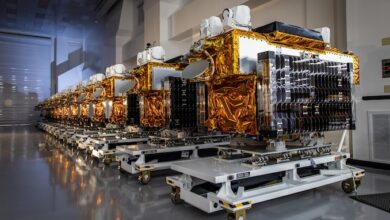
The most notable change is the inclusion of real, functioning Starlink satellites inside Starship’s cargo bay. SpaceX previously tested the ship’s payload deployment mechanism using simulators mimicking the mass and dimensions of the company’s next-generation Starlink Version 3 broadband satellites.
According to an Ars Technica report, for the scheduled launch, Starship’s 13th full-scale test flight and the second to use SpaceX’s newest version of Starship, technicians have installed 20 Starlink V3 satellites into the ship’s deployer, a system of pulleys and cables designed to eject a stack of satellites one at a time through an opening on the side of the spacecraft.
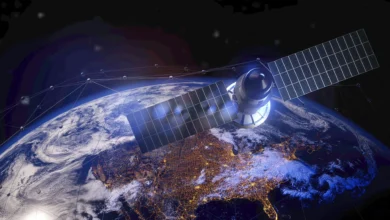
The satellites will not be part of SpaceX’s operational network, but engineers will attempt to briefly establish laser communication links between the Starlink V3s and other spacecraft flying in lowEarth orbit. If successful, these links will validate Starlink V3’s interoperability with SpaceX’s previous generation of Starlink satellites.
As with all of SpaceX’s previous Starship test flights, the more than 400-foottall rocket will fly on a long suborbital trajectory arcing halfway around the world from the launch site at Starbase, Texas, to a predetermined location in the Indian Ocean.
The flight of Starship and the 20 Starlink satellites will last a little more than an hour before they fall back into the atmosphere. The ship will target a controlled splashdown northwest of Australia, while the Starlink satellites will burn up during reentry.
The flight plan for this week’s mission has just enough time in space for the Starlink satellites to extend their solar arrays and antennas. The satellites will also attempt to connect with ground stations in South Africa as they soar nearly more than 100 miles overhead.
Additionally, some of the Starlink V3s will host cameras to scan Starship’s heat shield and transmit the imagery down to engineers on the ground, according to SpaceX. The imagery will allow ground teams to “continue testing methods of analyzing Starship’s heat shield readiness for return to launch site on future missions,” SpaceX said in a post on its website.
Two of the Starlink mockups carried cameras for external imaging on the last Starship mission, returning views of the ship set against the ghostly darkness of space. This time, SpaceX has affixed cameras to six of the Starlink satellites. The imaging opportunity on this week’s mission will occur during nighttime, just as it did on the last flight.
The presence of Starlink V3s on the next Starship test flight is a harbinger for what’s to come. Fully-loaded Starships will be capable of launching up to 60 Starlink V3s on a single flight, unlocking a dramatic expansion of the network’s capacity.
Each Falcon 9 launch with V2 satellites adds about 2.6 Tbps to the constellation. Pairing Starship with a full stack of V3 satellites will add 60 Tbps to the network.
Starship is designed to carry other kinds of satellites, too, including customer payloads and massive platforms for SpaceX’s proposed orbital data center network.