
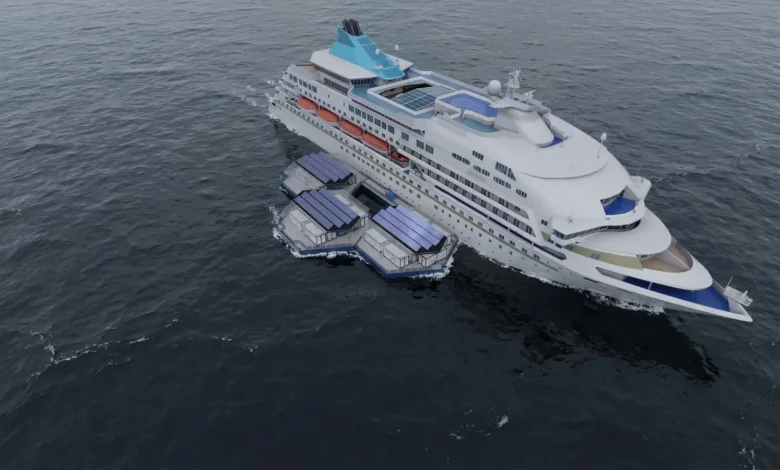
A United Kingdom-backed maritime consortium has validated a world-first grid-independent hydrogen power hub to accelerate port decarbonisation. The system has three modular hexagonal floating platforms spanning a combined footprint of nearly 12,900 square feet.
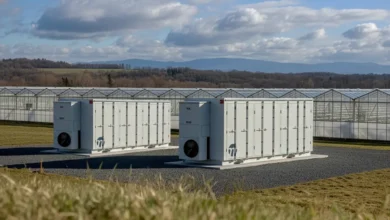
The platforms integrate approximately 45MWh of battery energy storage, modular fuel cell systems, hydrogen-powered generation, onboard renewable energy sources, and advanced grid-forming AC/DC electrical architecture designed to deliver power directly to vessels.
At the heart of the system are three modular hexagonal floating platforms spanning a combined footprint of nearly 12,900 square feet. The platforms integrate approximately 45MWh of battery energy storage, modular fuel cell systems, hydrogen-powered generation, onboard renewable energy sources, and advanced grid-forming AC/DC electrical architecture designed to deliver power directly to vessels.
The concept was validated through a six-month programme under the UK Research and Innovation Clean Maritime Demonstrator Competition Round 6, conducted in partnership with the UK Shipping Office for Reducing Emissions. The effort included hydrodynamic, structural, electrical, and operational testing.
The partners say the project demonstrated that existing hydrogen, battery, fuel-cell, and electrical technologies can be integrated into a modular floating system capable of supplying power to large ships at berth and deployed across ports worldwide.
Designed for large-scale maritime operations, the Hydrogen Power Hub can deliver up to 5MW of continuous clean electricity directly to vessels at berth. The system supports both 6.6kV and 11kV shore power connections, providing enough capacity to serve medium-sized cruise ships and other powerintensive maritime assets.
The project is aimed at overcoming one of the biggest challenges in port decarbonisation — access to reliable electrical infrastructure.
Many ports still struggle to deploy shore power at scale because of limited grid capacity, lengthy utility connection timelines, space constraints, complex permitting requirements, and the high costs associated with conventional shore-side power installations.