
United States battery startups went through a tough period when President Donald Trump signed a sweeping federal tax and spending tagged the One Big Beautiful Bill, which eliminated battery and EV incentives, undercutting a chunk of future demand.
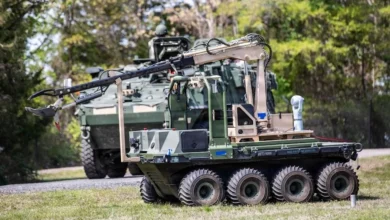
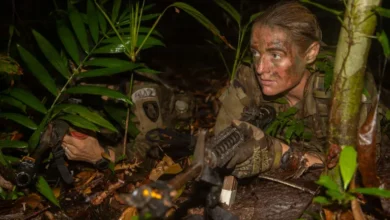
But things changed for the better recently, as the startups eventually found a lifeline in the defence world, helping to power everything from drones and torpedoes to infantry radios and fighter jets.
The Trump administration, despite its open disdain for EVs, acknowledges that batteries are an inescapable part of modern life. And like many things in Washington these days, it’s leaning on national security as justification for its recent decisions.
The latest comes from the Department of Energy, which late last week announced that it was awarding $500 million in grants to bolster the battery supply chain in the United States.
The programme aims to “reduce reliance on foreign sources, bolster national security, and advance American energy dominance,” which larger chunk of the funds going to startups.
TechCrunch quoted a spokesperson for Coreshell, a battery materials startup, as saying that defence applications of lithium-ion batteries are “absolutely playing out in discussions.”
The company recently brought on ADS Ventures as an investor; the strategic VC’s parent company, ADS, is a defense supplier, and it’s working with another supplier of autonomous systems.
Coreshell received a $50 million award from the DOE to expand manufacturing of its metallurgical silicon anode material.
Among other startups that received significant grants, Lilac Solutions, which extracts lithium from brines, landed $100 million to build a processing facility on Utah’s Great Salt Lake to produce 5,000 metric tons of lithium carbonate annually by 2028. Lithium carbonate is a key precursor used in battery production.
Nth Cycle told TechCrunch that it received $100 million to build a facility that will refine black mass from recycled lithium-ion batteries, producing lithium and nickel compounds that can be used to make new batteries.
Co-founder and chief executive of Nth Cycle, Megan O’Connor said: “We’re seeing clear demand drivers from the defense sector. But there’s still that in the automotive space as well.”
That dynamic is unlikely to change. Though EVs have been dealt a setback, automakers are still rolling out new models and expecting years of growth, albeit further out than expected.
Defence will continue to be a significant player. Exact numbers are unsurprisingly hard to come by, but even in 2021, the US Defence Logistics Agency was buying $200 million worth of batteries annually. But that’s dwarfed by the automotive industry.
This year, the automotive industry is expected to spend nearly $18 billion on battery manufacturing in the U.S. alone, according to Mordor Intelligence.
As battery companies undoubtedly know — and the Trump administration appears to tacitly acknowledge — the future is electric, but the timing is anything but settled.
In the meantime, soldiers and drones still need lightweight and capable batteries from US sources. A few years ago, those batteries could have come from domestic factories that sprung up in the wake of the Inflation Reduction Act.
But after the One Big Beautiful Bill gutted battery-production incentives, the Pentagon may have had to start looking for alternatives. These new DOE grants might amount to an admission that efforts to kill the American EV industry went a bit too far, TechCrunch observed.